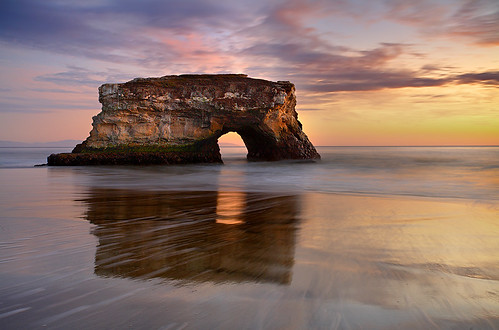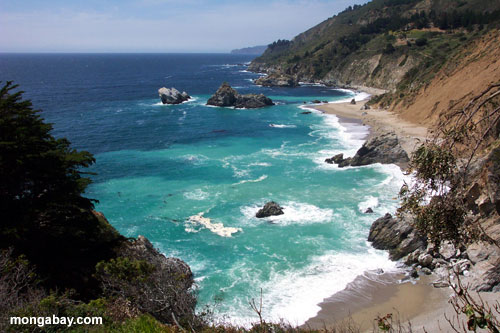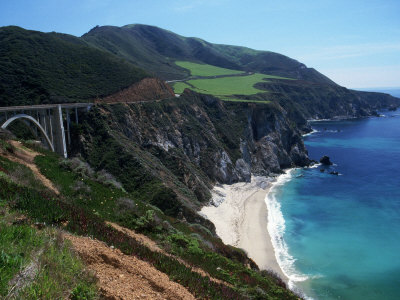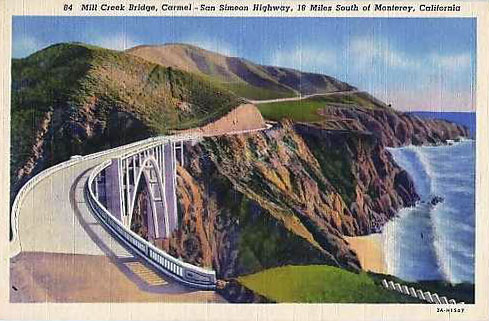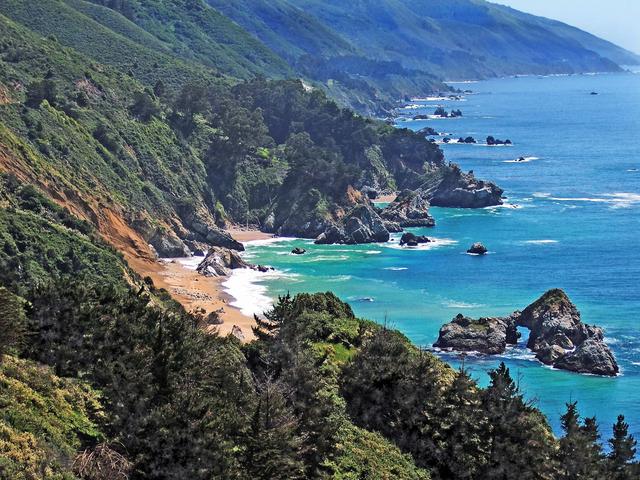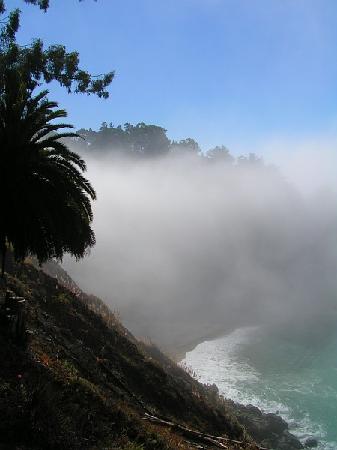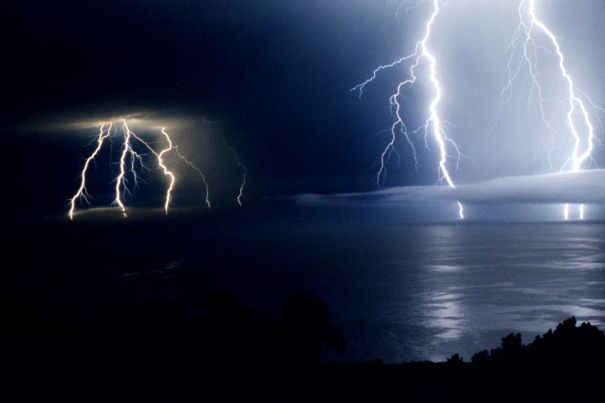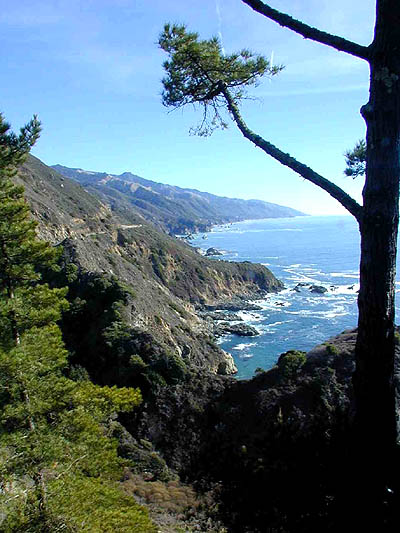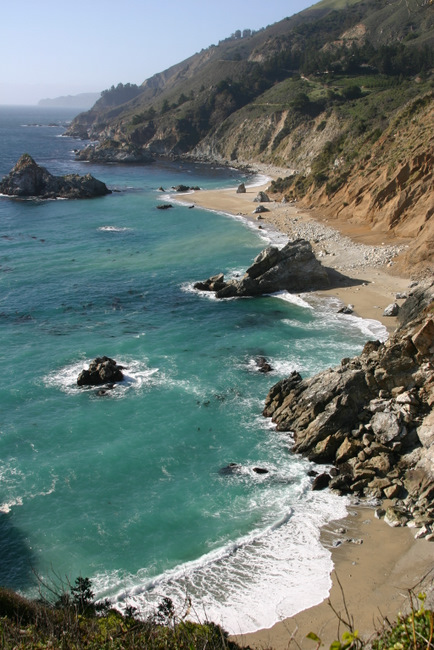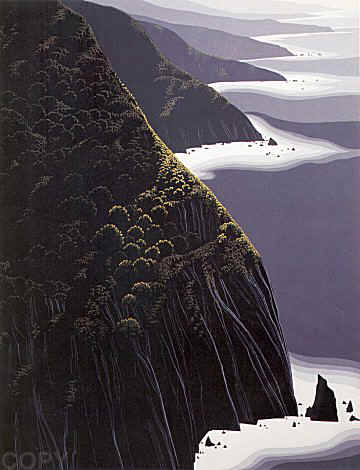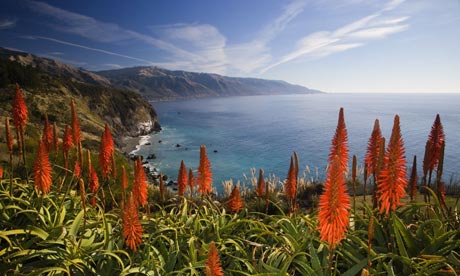


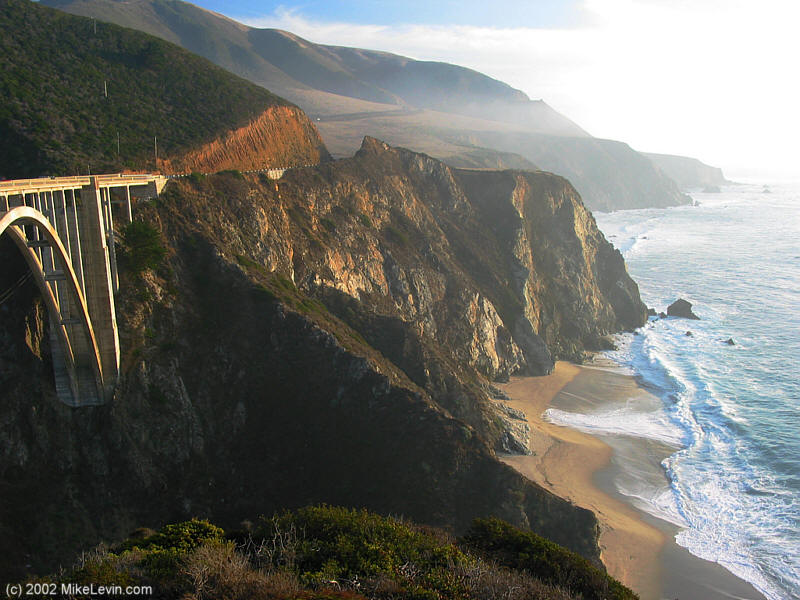

The scenery in Big Sur, California cannot be done justice by film or secondhand account. An eclectic populace and cosmic vibe flows through the area and permeates Big Sur hotels, shops and restaurants. A table with a view isn’t hard to come by in Big Sur. Neither is a sense of well-being. Cliffs, rocks, redwoods and effervescent surf create an epic backdrop for recreation, romance and relaxed exploration.
History
Originally inhabited by the Esselen, Salinan and Ohlone Native Americans, Big Sur was first settled by the Spanish in the 1830s, but developed its first large settlements due to the Gold Rush. The lumber industry thrived in the late 1800s in Big Sur, despite the difficulty of reaching the area; the population of Big Sur was greater at that time than it is today. The three-day, dangerous overland journey to Monterey meant most supplies were brought in and goods shipped out by ocean, rather than by road.
The construction of Highway One in the 1930s transformed Big Sur, making its beauty accessible to all rather than just the most intrepid. Residents fought to protect Big Sur against development, preserving its charms and its remote feel. Get a feel for Big Sur's history by visiting Andrew Molera State Park, home to Big Sur's oldest building, and that famous Big Sur lighthouse, Point Sur Lighthouse.
Big Sur has provided inspiration to photographers, painters, writers and musicians. Henry Miller and Jack Kerouac chronicled the area in books, and Ansel Adams and Edward Weston captured Big Sur's rugged beauty on film. Robinson Jeffers described Big Sur in epic verse, which later became the inspiration for the Beach Boys' album Holland.
Today Big Sur remains a favorite place for local and international artists of every stripe. Galleries located along Highway One exhibit stunning visual art, while venues such as the Henry Miller Library and Fernwood Resort host both cutting-edge acts and big names. For more information on the Big Sur arts scene, see our Big Sur Arts and Culture page.
Much of Big Sur is under the auspices of the state and federal park systems, and hiking trails permeate Big Sur. The Los Padres National Forest, Julia Pfeiffer Burns State Park, Pfeiffer Big Sur State Park, Garrapata State Park and Andrew Molera State Park are world-renowned for their stunning scenery, and with good reason. Each park has its own unique atmosphere, and no two hikes are alike.
Big Sur hiking trails range from tranquil walks along a coastal waterfall at Julia Pfeiffer Burns State Park, to miles-long ascents through the redwoods and into the rugged wilderness at the Los Padres National Forest…and everything in between. The sprawling nature of the region makes it possible to hike for hours in solitude. For more information on hiking in Big Sur, see the park links at left. Each page has detailed Big Sur hiking trail information, including descriptions of sample hikes and links to online trail maps.
Big Sur campsites range from fully equipped RV sites under the shade of redwoods to rustic hike-in tent sites with spectacular ocean views. For the dedicated hiker, use of the Los Padres National Forest's trail camps allow days of travel on foot without ever having to see civilization. Most of Big Sur's campsites are located within state and federal parks, and most are first come, first served. Camping reservations for Pfeiffer Big Sur and Julia Pfeiffer Burns State Parks can be made through the Reserve America website.
Three privately owned Big Sur campgrounds, Big Sur Campground and Cabins, Fernwood Resort and Riverside Campground and Cabins, are all nestled among the redwoods in the heart of Big Sur. If you want the tent camping experience without the hassle of bringing your own, stay in a Big Sur tent cabin at either Fernwood Resort or Big Sur Campground and Cabins. Contact the properties directly to make Big Sur camping reservations.
Big Sur lodging options range from luxury resorts perched above the rugged coastline to rustic cabins. All of Big Sur's accommodations are harmonious with the area, perfect for visitors seeking a retreat from the busy world. They also offer easy access to Big Sur hiking and other outdoor activities. Click here for a full list of Big Sur hotels and resorts.
Many consider Garrapata State Park's secluded beach to be the best in Big Sur. While there are no facilities, this sandy, unspoiled beach has stunning views and is easy to get to. You're also likely to spot sea otters, sea lions, seals and even the occasional migrating whale. Nearly invisible from the road, Garrapata State Park's beach can be reached from the trailheads at points 18 and 19. For detailed directions on getting to this hidden park, see our Garrapata State Park page.
Andrew Molera State Park's beach can be reached via the aptly named Beach Trail, which is an easy, almost flat hike along the banks of the Big Sur River. Andrew Molera State Park's beach is considered Big Sur's most reliable surfing destination, and is also a prime surf fishing spot. State park admission fees include parking; there are no facilities at the beach, but restrooms are available at the parking lot.
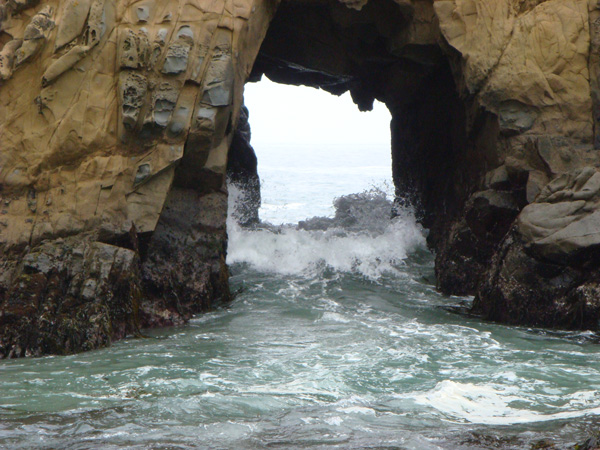
Don't confuse this beach with the one at Julia Pfeiffer Burns State Park, which lies a few miles south. Many locals name Pfeiffer Beach their favorite because of its wide sandy beaches and the arch rock that lies just offshore. Pfeiffer Beach is very hard to find for the uninitiated. It is located at the end of unmarked Sycamore Canyon Road, which is the only paved, ungated road on the west side of Highway One between the Big Sur Post Office and Pfeiffer Big Sur State Park.
Julia Pfeiffer Burns State Park's beach is only accessible on foot, but it's worth the trip. Popular with divers, this beach has excellent views and great tide pools. You'll also see equipment and artifacts left over from Big Sur's period as a center of the logging industry. To access the beach at Julia Pfeiffer Burns State Park, take the Partington Canyon Trail, located west of Highway One behind a gate about two miles north of the Julia Pfeiffer Burns State Park entrance. The trail runs through a rock tunnel on its way to Partington Cove.
The biggest unbroken stretch of beach in Big Sur, Sand Dollar Beach is popular with rockhounds for its jade and hikers and photographers for its breathtaking bluffs. (Planning to collect some jade? See our tips below under Jade Cove.) A steep staircase leads down to the beach. Sand Dollar Beach is 25 miles south of the main settlement in Big Sur on Highway One. It is well-signed.
Named after the smooth, waxy stone frequently found on its rocky beaches after a storm, Jade Cove lies 27 miles south of the main settlement in Big Sur, two miles south of Sand Dollar Beach, and just over three miles north of Gorda. Keep a sharp eye out for the trailhead sign by the side of Highway One, and park at the pullout.
If you plan to seek jade there, you should know that serpentine, a common stone that looks identical to jade, is also often found there. How to tell the difference? Serpentine can be scratched with a steel knife; jade can't, and you may see bits of metal left on the jade. Please see the Monterey Bay National Marine Sanctuary's regulations on collecting jade from beaches.


History
Originally inhabited by the Esselen, Salinan and Ohlone Native Americans, Big Sur was first settled by the Spanish in the 1830s, but developed its first large settlements due to the Gold Rush. The lumber industry thrived in the late 1800s in Big Sur, despite the difficulty of reaching the area; the population of Big Sur was greater at that time than it is today. The three-day, dangerous overland journey to Monterey meant most supplies were brought in and goods shipped out by ocean, rather than by road.
The construction of Highway One in the 1930s transformed Big Sur, making its beauty accessible to all rather than just the most intrepid. Residents fought to protect Big Sur against development, preserving its charms and its remote feel. Get a feel for Big Sur's history by visiting Andrew Molera State Park, home to Big Sur's oldest building, and that famous Big Sur lighthouse, Point Sur Lighthouse.
Artist's Haven
Big Sur has provided inspiration to photographers, painters, writers and musicians. Henry Miller and Jack Kerouac chronicled the area in books, and Ansel Adams and Edward Weston captured Big Sur's rugged beauty on film. Robinson Jeffers described Big Sur in epic verse, which later became the inspiration for the Beach Boys' album Holland.
Today Big Sur remains a favorite place for local and international artists of every stripe. Galleries located along Highway One exhibit stunning visual art, while venues such as the Henry Miller Library and Fernwood Resort host both cutting-edge acts and big names. For more information on the Big Sur arts scene, see our Big Sur Arts and Culture page.
Big Sur Hiking
Much of Big Sur is under the auspices of the state and federal park systems, and hiking trails permeate Big Sur. The Los Padres National Forest, Julia Pfeiffer Burns State Park, Pfeiffer Big Sur State Park, Garrapata State Park and Andrew Molera State Park are world-renowned for their stunning scenery, and with good reason. Each park has its own unique atmosphere, and no two hikes are alike.
Big Sur hiking trails range from tranquil walks along a coastal waterfall at Julia Pfeiffer Burns State Park, to miles-long ascents through the redwoods and into the rugged wilderness at the Los Padres National Forest…and everything in between. The sprawling nature of the region makes it possible to hike for hours in solitude. For more information on hiking in Big Sur, see the park links at left. Each page has detailed Big Sur hiking trail information, including descriptions of sample hikes and links to online trail maps.
Big Sur Campsites
Big Sur campsites range from fully equipped RV sites under the shade of redwoods to rustic hike-in tent sites with spectacular ocean views. For the dedicated hiker, use of the Los Padres National Forest's trail camps allow days of travel on foot without ever having to see civilization. Most of Big Sur's campsites are located within state and federal parks, and most are first come, first served. Camping reservations for Pfeiffer Big Sur and Julia Pfeiffer Burns State Parks can be made through the Reserve America website.
Three privately owned Big Sur campgrounds, Big Sur Campground and Cabins, Fernwood Resort and Riverside Campground and Cabins, are all nestled among the redwoods in the heart of Big Sur. If you want the tent camping experience without the hassle of bringing your own, stay in a Big Sur tent cabin at either Fernwood Resort or Big Sur Campground and Cabins. Contact the properties directly to make Big Sur camping reservations.
Big Sur Hotels
Big Sur lodging options range from luxury resorts perched above the rugged coastline to rustic cabins. All of Big Sur's accommodations are harmonious with the area, perfect for visitors seeking a retreat from the busy world. They also offer easy access to Big Sur hiking and other outdoor activities. Click here for a full list of Big Sur hotels and resorts.
Big Sur Beaches
Big Sur's beaches show off the California coastline at its rugged, unspoiled best. Due to their similar names, two beaches — Julia Pfeiffer Burns State Park's beach and Pfeiffer Beach — are often conflated, but each is separate and has its own unique charms. While some of Big Sur's wild beaches are accessible by car, visitors should expect to hike to reach most of them.- Garrapata State Park Beach
Many consider Garrapata State Park's secluded beach to be the best in Big Sur. While there are no facilities, this sandy, unspoiled beach has stunning views and is easy to get to. You're also likely to spot sea otters, sea lions, seals and even the occasional migrating whale. Nearly invisible from the road, Garrapata State Park's beach can be reached from the trailheads at points 18 and 19. For detailed directions on getting to this hidden park, see our Garrapata State Park page.
- Andrew Molera State Park Beach
Andrew Molera State Park's beach can be reached via the aptly named Beach Trail, which is an easy, almost flat hike along the banks of the Big Sur River. Andrew Molera State Park's beach is considered Big Sur's most reliable surfing destination, and is also a prime surf fishing spot. State park admission fees include parking; there are no facilities at the beach, but restrooms are available at the parking lot.
- Pfeiffer Beach
Don't confuse this beach with the one at Julia Pfeiffer Burns State Park, which lies a few miles south. Many locals name Pfeiffer Beach their favorite because of its wide sandy beaches and the arch rock that lies just offshore. Pfeiffer Beach is very hard to find for the uninitiated. It is located at the end of unmarked Sycamore Canyon Road, which is the only paved, ungated road on the west side of Highway One between the Big Sur Post Office and Pfeiffer Big Sur State Park.
- Julia Pfeiffer Burns State Park Beach
Julia Pfeiffer Burns State Park's beach is only accessible on foot, but it's worth the trip. Popular with divers, this beach has excellent views and great tide pools. You'll also see equipment and artifacts left over from Big Sur's period as a center of the logging industry. To access the beach at Julia Pfeiffer Burns State Park, take the Partington Canyon Trail, located west of Highway One behind a gate about two miles north of the Julia Pfeiffer Burns State Park entrance. The trail runs through a rock tunnel on its way to Partington Cove.
- Sand Dollar Beach
The biggest unbroken stretch of beach in Big Sur, Sand Dollar Beach is popular with rockhounds for its jade and hikers and photographers for its breathtaking bluffs. (Planning to collect some jade? See our tips below under Jade Cove.) A steep staircase leads down to the beach. Sand Dollar Beach is 25 miles south of the main settlement in Big Sur on Highway One. It is well-signed.
- Jade Cove
Named after the smooth, waxy stone frequently found on its rocky beaches after a storm, Jade Cove lies 27 miles south of the main settlement in Big Sur, two miles south of Sand Dollar Beach, and just over three miles north of Gorda. Keep a sharp eye out for the trailhead sign by the side of Highway One, and park at the pullout.
If you plan to seek jade there, you should know that serpentine, a common stone that looks identical to jade, is also often found there. How to tell the difference? Serpentine can be scratched with a steel knife; jade can't, and you may see bits of metal left on the jade. Please see the Monterey Bay National Marine Sanctuary's regulations on collecting jade from beaches.