Get widget

News

All kinds of news around the world in one place!

Studies

Explore with us and enjoy in that!

Encyclopedia

Start with us a journey through world of knowledge!

Travel

The world is beautiful. Let's peek into some magnificent places, and see what they offer!

Entertainment

Fun - because we have the right to be happy!

Lifestyle

Our life is adventure. Enjoy in every moment of that!

TOP 10

Amazing lists of incredible things!

Mayan prophecy pegged to wrong year?

It's a good news/bad news situation for believers in the 2012 Mayan apocalypse. The good news is that the Mayan "Long Count" calendar may not end on Dec. 21, 2012 (and, by extension, the world may not end along with it). The bad news for prophecy believers? If the calendar doesn't end in December 2012, no one knows when it actually will — or if it has already.
A new critique, published as a chapter in the new textbook "Calendars and Years II: Astronomy and Time in the Ancient and Medieval World" (Oxbow Books, 2010), argues that the accepted conversions of dates from Mayan to the modern calendar may be off by as much as 50 or 100 years. That would throw the supposed and overhyped 2012 apocalypse off by decades and cast into doubt the dates of historical Mayan events. (The doomsday worries are based on the fact that the Mayan calendar ends in 2012, much as our year ends on Dec. 31.)
The Mayan calendar was converted to today's Gregorian calendar using a calculation called the GMT constant, named for the last initials of three early Mayanist researchers. Much of the work emphasized dates recovered from colonial documents that were written in the Mayan language in the Latin alphabet, according to the chapter's author, Gerardo Aldana, University of California, Santa Barbara professor of Chicana and Chicano Studies.
Later, the GMT constant was bolstered by American linguist and anthropologist Floyd Lounsbury, who used data in the Dresden Codex Venus Table, a Mayan calendar and almanac that charts dates relative to the movements of Venus.
"He took the position that his work removed the last obstacle to fully accepting the GMT constant," Aldana said in a statement. "Others took his work even further, suggesting that he had proven the GMT constant to be correct."
But according to Aldana, Lounsbury's evidence is far from irrefutable.
"If the Venus Table cannot be used to prove the FMT as Lounsbury suggests, its acceptance depends on the reliability of the corroborating data," he said. That historical data, he said, is less reliable than the Table itself, causing the argument for the GMT constant to fall "like a stack of cards."
Aldana doesn't have any answers as to what the correct calendar conversion might be, preferring to focus on why the current interpretation may be wrong. Looks like end-of-the-world theorists may need to find another ancient calendar on which to pin their apocalyptic hopes.
LiveScience.com chronicles the daily advances and innovations made in science and technology. We take on the misconceptions that often pop up around scientific discoveries and deliver short, provocative explanations with a certain wit and style. Check out our science videos, Trivia & Quizzes and Top 10s. Join our community to debate hot-button issues like stem cells, climate change and evolution. You can also sign up for free newsletters, register for RSS feeds and get cool gadgets at the LiveScience Store.

If you like this post just click here Posted By crkota with No comments

10 Failed Doomsday Predictions

With the upcoming disaster film "2012" and the current hype about Mayan calendars and doomsday predictions, it seems like a good time to put such notions in context.
Most prophets of doom come from a religious perspective, though the secular crowd has caused its share of scares as well. One thing the doomsday scenarios tend to share in common: They don't come to pass.
Here are 10 that didn't pan out, so far:

1.The Prophet Hen of Leeds, 1806
History has countless examples of people who have proclaimed that the return of Jesus Christ is imminent, but perhaps there has never been a stranger messenger than a hen in the English town of Leeds in 1806. It seems that a hen began laying eggs on which the phrase "Christ is coming" was written. As news of this miracle spread, many people became convinced that doomsday was at hand — until a curious local actually watched the hen laying one of the prophetic eggs and discovered someone had hatched a hoax.
2.The Millerites, April 23, 1843
A New England farmer named William Miller, after several years of very careful study of his Bible, concluded that God's chosen time to destroy the world could be divined from a strict literal interpretation of scripture. As he explained to anyone who would listen, the world would end some time between March 21, 1843 and March 21, 1844. He preached and published enough to eventually lead thousands of followers (known as Millerites) who decided that the actual date was April 23, 1843. Many sold or gave away their possessions, assuming they would not be needed; though when April 23 arrived (but Jesus didn't) the group eventually disbanded—some of them forming what is now the Seventh Day Adventists.
3.Mormon Armageddon, 1891 or earlier
Joseph Smith, founder of the Mormon church, called a meeting of his church leaders in February 1835 to tell them that he had spoken to God recently, and during their conversation he learned that Jesus would return within the next 56 years, after which the End Times would begin promptly.
4.Halley's Comet, 1910
In 1881, an astronomer discovered through spectral analysis that comet tails include a deadly gas called cyanogen (related, as the name imples, to cyanide). This was of only passing interest until someone realized that Earth would pass through the tail of Halley's comet in 1910. Would everyone on the planet be bathed in deadly toxic gas? That was the speculation reprinted on the front pages of "The New York Times" and other newspapers, resulting in a widespread panic across the United States and abroad. Finally even-headed scientists explained that there was nothing to fear.
5.Pat Robertson, 1982
In May 1980, televangelist and Christian Coalition founder Pat Robertson startled and alarmed many when — contrary to Matthew 24:36 ("No one knows about that day or hour, not even the angels in heaven...") he informed his "700 Club" TV show audience around the world that he knew when the world would end. "I guarantee you by the end of 1982 there is going to be a judgment on the world," Robertson said.
6.Heaven's Gate, 1997
When comet Hale-Bopp appeared in 1997, rumors surfaced that an alien spacecraft was following the comet — covered up, of course, by NASA and the astronomical community. Though the claim was refuted by astronomers (and could be refuted by anyone with a good telescope), the rumors were publicized on Art Bell's paranormal radio talk show "Coast to Coast AM." These claims inspired a San Diego UFO cult named Heaven's Gate to conclude that the world would end soon. The world did indeed end for 39 of the cult members, who committed suicide on March 26, 1997.
7.Nostradamus, August 1999
The heavily obfuscated and metaphorical writings of Michel de Nostrdame have intrigued people for over 400 years. His writings, the accuracy of which relies heavily upon very flexible interpretations, have been translated and re-translated in dozens of different versions. One of the most famous quatrains read, "The year 1999, seventh month / From the sky will come great king of terror." Many Nostradamus
devotees grew concerned that this was the famed prognosticator's vision of Armageddon.
8.Y2K, Jan. 1, 2000
As the last century drew to a close, many people grew concerned that computers might bring about doomsday. The problem, first noted in the early 1970s, was that many computers would not be able to tell the difference between 2000 and 1900 dates. No one was really sure what that would do, but many suggested catastrophic problems ranging from vast blackouts to nuclear holocaust. Gun sales jumped and survivalists prepared to live in bunkers, but the new millennium began with only a few glitches.
9.May 5, 2000
In case the Y2K bug didn't do us in, global catastrophe was assured by Richard Noone, author of the 1997 book "5/5/2000 Ice: the Ultimate Disaster." According to Noone, the Antarctic ice mass would be three miles thick by May 5, 2000 — a date in which the planets would be aligned in the heavens, somehow resulting in a global icy death (or at least a lot of book sales). Perhaps global warming kept the ice age at bay.
10.God's Church Ministry, Fall 2008
According to God's Church minister Ronald Weinland, the end times are upon us-- again. His 2006 book "2008: God's Final Witness" states that hundreds of millions of people will die, and by the end of 2006, "there will be a maximum time of two years remaining before the world will be plunged into the worst time of all human history. By the fall of 2008, the United States will have collapsed as a world power, and no longer exist as an independent nation." As the book notes, "Ronald Weinland places his reputation on the line as the end-time prophet of God."

If you like this post just click here Posted By crkota with No comments

UFO's over Manhattan

A mysterious shiny object floating high over Manhattan's West Side set off a flurry of reports and wild speculation Wednesday that a UFO was flying over the city.Police and the FAA said they began getting flooded with calls starting at 1:30 p.m. from people reporting a silvery object hovering high over Chelsea.Law enforcement sources said they believed the object was likely some sort of balloon, but as of late Wednesday they had not confirmed exactly what it is.A Daily News reporter could see a tiny, silver dot floating approximately 5,000 feet above 23th St. and Eighth Ave., where dozens of people gathered late in the afternoon to catch a glimpse."It's been hovering there for a while. I'm just kind of baffled," said Joseph Torres, 49, of Dyker Heights, Brooklyn, who spotted the object after leaving a movie.

"How can it be ordinary? There is something going on."Despite clear skies, it was not easy to make out the tiny object shimmering overhead."You really have to look up to see it," said one witness, who gave only his first name, Rico. "It's a little crazy. I guess that's why they call it an unidentified flying object because they don't know what it is."Not long after the first sightings, messages began appearing on Twitter linking to a month-old press release announcing the publication of a book by a retired NORAD officer predicting that UFOs would buzz the earth's major cities on Oct. 13.
The Federal Aviation Administration said it received several calls to its operations center but after reviewing radar data, the agency could not find anything out of the ordinary."We re-ran radar to see if there was anything there that we can't account for but there is nothing in the area," said spokesman Jim Peters. "There was some helicopter traffic over the river at that time and we checked with LaGuardia Tower. And they said they had nothing going low at that time.""Nothing that we can account for would prompt this kind of response," he said.Peters said if it was a weather balloon or any kind of organized balloon release, authorities should have been notified in advance. Police officials said they had received no notification.


If you like this post just click here Posted By crkota with No comments

World's biggest enchilada


Residents of Iztapalapa cooked up a 230-foot-long, almost 1½-ton enchilada on Sunday. Guinness record official Ralph Hannah announced that it was the world's biggest.
The colossal concoction was made of corn tortillas, white onions, serrano chilis, green tomatoes, avocado, cheese, cream and a sea of salsas, among other ingredients.
"With this Guinness record we are showing the world that Iztapalapa is a high-level tourist destination," said Mexico City tourism secretary Alejandro Rojas.
Mexico City has gone for a number of world records recently, including the largest number of people dancing Michael Jackson's "Thriller" and most people kissing simultaneously.
The world's largest enchilada is the latest food to enter the Guinness Book of Records thanks to its impressive size.
Last year a cafe in Sydney, Australia, created the world's biggest burger, weighing in at 15 stone.
The world's longest hot dog was assembled in 2006 in Japan, measuring a mighty 198 feet long.


If you like this post just click here Posted By crkota with No comments

30,000 years old bread

Starch grains found on 30,000-year-old grinding stones suggest that prehistoric man may have dined on an early form of flat bread, contrary to his popular image as primarily a meat-eater.
The findings, published in the Proceedings of the National Academy of Sciences (PNAS) journal on Monday, indicate that Palaeolithic Europeans ground down plant roots similar to potatoes to make flour, which was later whisked into dough.
"It's like a flat bread, like a pancake with just water and flour," said Laura Longo, a researcher on the team from the Italian Institute of Prehistory and Early History.
"You make a kind of pita and cook it on the hot stone," she said, describing how the team replicated the cooking process. The end product was "crispy like a cracker but not very tasty," she added.
The grinding stones, each of which fit comfortably into an adult's palm, were discovered at archaeological sites in Italy, Russia and the Czech Republic.
The researchers said their findings throw mankind's first known use of flour back some 10,000 years, the previously oldest evidence having been found in Israel on 20,000 year-old grinding stones.
The findings may also upset fans of the Paleolithic diet, which follows earlier research that assumes early humans ate a meat-centered diet.
Also known as the caveman diet, the regime frowns on carbohydrate-laden foods like bread and cereal, and modern-day adherents eat only lean meat, vegetables and fruit.
It was first popularized by the gastroenterologist Walter L. Voegtlin, whose 1975 book lauded the benefits of the hunter-gatherer diet.

If you like this post just click here Posted By crkota with No comments

Italy's qualifier against Serbia is abandoned after visiting fans wreak havoc in Genova


Italy's European Championship qualifier against Serbia was dramatically abandoned in Genova after the visiting fans threw flares onto the pitch and lighting fireworks.
The teams came out and began to line up for the national anthems but then were sent back into the changing rooms as police in riot gear came out to confront the fans.
Serbian supporters clashed earlier in the day with police and glass partitions were broken in the stadium as fans with their heads covered climbed up onto them and began cutting through a mesh fence with tools.
The teams eventually came back out and began warming up again but there was no immediate sign that the game would begin.
'We just had a meeting with the UEFA delegate, the Serbian police and our police to see if we can play but it seems very doubtful,' said Italian football federation general director Antonello Valentini, speaking to Italian broadcasters RAI.
Even before the delay, Serbia's No 1 goalkeeper Vladimir Stojkovic is understood to have pleaded with officials to be dropped following threats outside his hotel earlier.
At one point, the Serbia squad walked over and appeared to applaud their fans ironically and ask them to calm down.
'We didn't applaud, we calmed down the fans,' said Serbia captain Dejan Stankovic.
The unsavory incident sours a week to forget for Serbia following the 3-1 home defeat to Estonia on Friday.
That match marked the debut of new coach Vladimir Petrovic, who replaced sacked Radomir Antic after last month's 1-1 Group C draw at home with Slovenia, which only added to a crisis that began with a disappointing first-round exit from the World Cup.


If you like this post just click here Posted By crkota with No comments

Columbus Day


The Columbus Day holiday varies from state to state in America, many people of the country are curious about today being a holiday or not. There are different types of celebrations for the Columbus Day some states declare this day as the Columbus Day holiday and people enjoy a day off from work and students don’t go to schools, on the other hand some of the states of the country don’t recognize this day and everything goes normally and no Columbus Day holiday is celebrated. The very reason for all this is that the exact birth date of Christopher Columbus is not known, according to people it is between the twenty fifth of August and the thirty first of October. We don’t know the exact date of birth of the discoverer of the American continent. In the most parts of the country the jobs that are affiliated with the American government are closed on the 11th of October. The 11th of October has been decided as the Columbus Day and normally this day is declared a holiday, but many organizations and states don’t recognize this day. The stocks will remain open today and if you also work in such a place then you have to go to work today, this shows that the corporate world does not recognize the Columbus Day. The United States is actually not the only one that is going to celebrate the Columbus Day today, many of other countries that include several of the European countries will also celebrate the Columbus Day.

If you like this post just click here Posted By crkota with No comments

Novak Djokovic wins another China title

BEIJING -- Top-seeded Novak Djokovic beat David Ferrer of Spain 6-2, 6-4 on Monday to successfully defend his China Open title.
The world No. 2 cruised through the first set of a match that had been rained out Sunday, before falling behind 4-2 in the second.
At 4-3, the eighth-ranked Ferrer battled to hold serve and defend his lead, but Djokovic was relentless, breaking him to take the set and, two games later, the match.
"I started off really well but then I lost the momentum, I kind of lost the rhythm, got him back into the match with some unforced errors," said Djokovic, who converted four of six break points while being broken only once to wrap up his second title of the season.
"It wasn't a really nice looking match from both sides. We made a lot of unforced errors, especially him. He made my life a little bit easier at the end of the second set, where, with his unforced errors, I got back into the set," the Serb said.
Djokovic, runner-up at last month's U.S. Open, said he was pleased with his improved serve, which he says is largely responsible for the run of success he's experienced since Wimbledon.
The 23-year-old had somewhat more difficulty accounting for his success in Beijing, where he won the Olympic bronze medal in 2008 in addition to his back-to-back China Open titles. The playing surface -- and the local cuisine -- seem to suit his style of play, Djokovic said.
"There's something special about this place."
Djokovic now moves on to the ATP Masters in Shanghai, where he will face either Ivan Ljubicic of Croatia or Chinese qualifier Zhang Ze on Wednesday.
"This is definitely a confidence boost for me. The last two, three months ... feeling much more comfortable and confident on the court, playing the aggressive game and service is working for me which is a great thing to have," he said. "Let's see if I can keep it up. Energy-wise, I'm fresh."
Ferrer has less time to rest with a match against Frenchman Michael Llodra in Shanghai on Tuesday. He also pointed to the eighth game of the second set as having decided Monday's match.
"I had my chance there, but didn't do it," said the 28-year-old, who entered the final after beating Ljubicic in three sets in Saturday's semifinals. "Maybe when I lost this game, I lost a little bit my concentration and couldn't come back and play regular again."
New world No. 1 Caroline Wozniacki plays No. 3 Vera Zvonareva later Monday for the women's title. Zvonareva has won three of their previous five meetings.

If you like this post just click here Posted By crkota with No comments

Banksy creates new Simpsons title sequence

The Simpsons, Thursday 21 October, 1930BST, Sky 1 HD and Sky 1
UK graffiti artist Banksy has created a controversial title sequence for long-running US animation The Simpsons.
The intro, which was shown in the US on Sunday, opens with the street artist's tag scrawled across the town of Springfield.
It closes with a minute-long sequence showing dozens of sweatshop workers in a warehouse painting cartoon cells and making Simpsons merchandise.
The episode, called MoneyBart, will be shown in the UK on 21 October.
It is the first time an artist has been invited to storyboard part of the show.
The extended sequence was apparently inspired by reports the show outsources the bulk of their animation to a company in South Korea.
Delays and disputes
It features Bart Simpson with his face covered as he writes all over his classroom walls.
While in the sweatshop, kittens are thrown into a wood chipper so their fur can be used to stuff Bart Simpson dolls and a chained unicorn is used to punch holes in Simpsons DVDs.
According to the street artist, his storyboard led to delays, disputes over broadcast standards and a threatened walk out by the animation department.
"This is what you get when you outsource," joked The Simpsons executive producer Al Jean.
Other famous Britons to have contributed to the show include Tony Blair, Simon Cowell and Ricky Gervais.
Gervais also wrote Homer Simpson, This Is Your Wife in 2006, and is to make another appearance on the show next year.

If you like this post just click here Posted By crkota with No comments

Chinese UFO over Inner Mongolia still a mystery

UFO? Kite? New Chinese military aircraft? Whatever it was last month, it's still hovering in the news.
China's state-run People's Daily reported Sept. 13 (in its "Life & Culture" section) that air traffic controllers "observed with instruments" a UFO about 20 miles from Baotou, the largest city in Inner Mongolia, about 8 p.m. on Sept. 11. Flights were diverted to a secondary airport and three flights were forced to circle to avoid "collisions," a Baotou Airport spokeswoman said. Normal operations resumed after about an hour. The PD offered no details about the UFO.


Yesterday, the UFO reappeared — in the saucy British tabloid The Sun, renewing interest in the night lights over northeastern China. Accompanying a photo, The Sun wrote that a "major" airport "was forced to shut down to prevent packed passenger jets crashing into a UFO." Without citing a source, the paper described the object as, quote, "flat and tubular" (a seeming oxymoron ) and wrote that it "hovered two miles from Bootee" (its transliteration of Baotou). "Astonished officials say it then zoomed in to circle the airport before suddenly vanishing," according to The Sun.


Video shows nothing but an occasional blinking light. UFOs over China are becoming almost routine.


Last month's report was the ninth in three months, with at least eight sightings reported in several provinces between late June and late July. One in July that briefly closed an airport in Hangzhou turned out to be part of a military test at a nearby air base. Another UFO was just jet contrails, and one other was a kite.
The blurry photo in The Sun looks suspiciously like the UFO that disrupted air traffic in Hangzhou for an hour the night of July 7. And the details of that incident also have a familiar, earthly ring.


If you like this post just click here Posted By crkota with No comments

Lost language found on two distance places!

*in India...
WASHINGTON – A "hidden" language spoken by only about 1,000 people has been discovered in the remote northeast corner of India by researchers who at first thought they were documenting a dialect of the Aka culture, a tribal community in the foothills of the Himalayas.
They found an entirely different vocabulary and linguistic structure.
Even the speakers of the tongue, called Koro, did not realize they had a distinct language, linguist K. David Harrison said Tuesday.
Culturally, the Koro speakers are part of the Aka community in India's Arunachal Pradesh state, and Harrison, associate professor of linguistics at Swarthmore College, said both groups merely considered Koro a dialect of the Aka language.
But researchers studying the groups found they used different words for body parts, numbers and other concepts, establishing Koro as a separate language, Harrison said.
"Koro is quite distinct from the Aka language," said Gregory Anderson, director of the Living Tongues Institute for Endangered Languages. "When we went there we were told it was a dialect of Aka, but it is a distant sister language."
People of the Aka culture live in small villages near the borders of China, Tibet and Burma (also known as Myanmar). They practice subsistence hunting, farming and gathering firewood in the forest and tend to wear ornate clothing of hand-woven cloth, favoring red garments. Their languages are not well known, though they were first noted in the 19th century.
The region where they live in the foothills of the Himalaya Mountains requires a special permit to enter. There, the researchers crossed a mountain river on a bamboo raft and climbed steep hillsides to to reach the remote villages, going door-to-door among the bamboo houses that sit on stilts.
Harrison and Anderson spoke at a news conference organized by the National Geographic Society, which supported their work.
The northeast corner of India is known as a hotspot of language diversity and researchers were documenting some of the unwritten tongues when they came across Koro in research started in 2008.
The timing of their discovery was important.
"We were finding something that was making its exit, was on its way out. And if we had waited 10 years to make the trip, we might not have come across close to the number of speakers we found," said Anderson.
Previously undocumented languages are "noticed from time to time" Harrison said, so such a discovery is not rare. But at the same time linguists estimate that a language "dies" about every two weeks with the loss of its last speakers.
Counting Koro there are 6,910 documented languages in the world, Harrison said. But he added that is really just a best estimate that can change regularly.
Many languages around the world are considered endangered, including Koro, he explained, because younger people tend to shift to the more dominant language in a region.
Unusually, Koro has been maintained within the Aka community, the researchers said, even though there is intermarriage and the groups share villages, traditions, festivals and food. In addition to the estimated 800 to 1,200 Koro speakers, the West Kameng and East Kameng districts of Arunachal Pradesh contain 4,000 to 6,000 Aka speakers.
The Koro speakers "consider themselves to be Aka tribally, though linguistically they are Koro. It's an unusual condition, such arrangement doesn't usually allow for maintenance of the minor language," Anderson said.
The threat, however, is from the spread of Hindi, a dominant language in India, and many youngsters go to boarding schools where they learn Hindi or English.
The researchers said they hope to figure out how the Koro language managed to survive within the Aka community.
They said Koro is a member of the Tibeto-Burman language family, a group of some 400 languages that includes Tibetan and Burmese. While Koro differs from Aka, it does share some things with another language, Tani, which is spoken farther to the east.
The research was started in 2008 to document two little known languages, Aka and Miji, and the third language, Koro, was discovered in that process.
"We didn't have to get far on our word list to realize it was extremely different in every possible way," Harrison said.
They said Koro's inventory of sounds was completely different, and so was the way sounds combine to form words. Words also are built differently in Koro, as are sentences.
The Aka word for "mountain" is "phu," while the Koro word is "nggo." Aka speakers call a pig a "vo" while to Koro speakers, a pig is a "lele."
"Koro could hardly sound more different from Aka," reported Harrison, author of a new book "The Last Speakers," about vanishing languages. Joining the two was linguist Ganesh Murmu of Ranchi University in India.
The researchers detail Koro in a scientific paper to be published in the journal Indian Linguistics.
*in Peru...
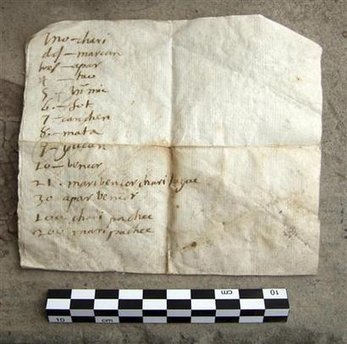
LIMA (Reuters) – Archaeologists say scrawl on the back of a letter recovered from a 17th century dig site reveals a previously unknown language spoken by indigenous peoples in northern Peru.
A team of international archaeologists found the letter under a pile of adobe bricks in a collapsed church complex near Trujillo, 347 miles (560 km) north of Lima. The complex had been inhabited by Dominican friars for two centuries.
"Our investigations determined that this piece of paper records a number system in a language that has been lost for hundreds of years," Jeffrey Quilter, an archaeologist at Harvard's Peabody Museum of Archaeology and Ethnology, told Reuters.
A photograph of the letter recently released by archaeologists shows a column of numbers written in Spanish and translated into a language that scholars say is now extinct.
"We discovered a language no one has seen or heard since the 16th or 17th century," Quilter said, adding that the language appears to have been influenced by Quechua, an ancient tongue still spoken by millions of people across the Andes.
He said it could also be the written version of a language colonial-era Spaniards referred to in historical writings as pescadora, for the fishermen on Peru's northern coast who spoke it.
So far no record of the pescadora language has been found.
The letter, buried in the ruins of the Magdalena de Cao Viejo church at the El Brujo Archaeological Complex in northern Peru, was discovered in 2008.
But Quilter said archaeologists decided to keep their discovery secret until the research showing evidence of the lost language was published this month in the journal American Anthropologist.
"I think a lot of people don't realise how many languages were spoken in pre-contact times," Quilter said. "Linguistically, the relationship between the Spanish conquistadors and the indigenous was very complex."

If you like this post just click here Posted By crkota with No comments

Strange Island for sale

PLUM ISLAND, N.Y. – The classified ad might read: "Island for sale. Gem of a property, teeming with fish and wildlife, only a two-hour drive from nation's largest metro area. Features power plant, sewage treatment. Ripe for development."
What it might not say: "Site of animal disease research and germ warfare testing; old Army coastal defense post."
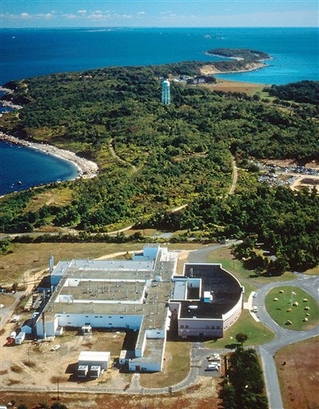
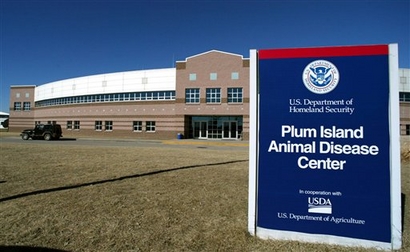
Plum Island held an open house of sorts for environmental leaders Wednesday as the federal government proceeds with plans to relocate its 50-year-old animal disease research laboratory to Kansas and sell the 840-acre pork chop-shaped island off the eastern tip of New York's Long Island.
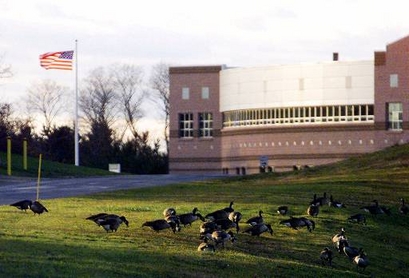
The laboratory is modern and would not look out of place on any college campus, but the rest of the island is largely undeveloped with freshwater marshes, pristine beaches and seals resting on huge rocks just offshore. There is also an 1869 lighthouse (no longer in use) and buildings from a U.S. Army base that closed after World War II.
The visit was part of an ongoing effort by Plum Island brass to end the suspicion surrounding the island made famous in a 1997 Nelson DeMille best-selling book of the same name, and its mention as a possible home for Hannibal Lecter in the film "Silence of the Lambs."
"There has been, in the past, more secrecy about the facility," said lab director Dr. Larry Barrett, who noted more than a dozen community groups have visited this year. "This facility is not a threat to the nation, it's not a threat to anyone. The job here is to protect our nation against attacks on our livestock."
Agriculture Department scientists perform the lab studies, but the Department of Homeland Security has overseen the island and its security since 2003.
Because the island is a potential target for those who might want to steal dangerous pathogens or wreak havoc, visitors must undergo FBI background checks and all bags are inspected before anyone is permitted onto a ferry for the 1.5-mile trip. Armed guards check visitors leaving the island to ensure no food or other material is carried back to the populated areas.
Environmentalists peppered Plum Island officials with questions about sewage treatment, groundwater testing, whether surveys have been conducted on the impact a sale might have on wildlife and concerns about possible contamination. The officials were short on specific answers but promised a follow-up meeting.
"I was a little surprised by the lack of detailed environmental information so that was a little disappointing, said Adrienne Esposito, executive director of the Citizens Campaign for the Environment. "So we still have the same concerns. The same concerns about groundwater, soil, wetland contamination. We need to make sure that public health is protected as well as the natural assets."
Most of the environmentalists said they would support a research and development facility to replace the laboratory but were adamant that most of the island should remain in its natural state.
"It would be a terrible insult to the millions of people who live within an hour's drive of the (Long Island) Sound for this to be developed as a playground for the few, as opposed to making it a managed and loved place for the many," said Curt Johnson, program director of a group called Save the Sound.
He said the island has been identified as an exemplary site for fish and wildlife. Great Gull Island and Little Gull Island, both nearby, combined with Plum Island have a large population of nesting roseate terns, an endangered species, he added.
"This is an incredible snapshot of what Long Island Sound looked like hundreds of years ago," Sandy Breslin, director of governmental affairs for Audubon Connecticut, said as she watched seals resting on rocks.
The General Services Administration, which is responsible for selling the island, is compiling a draft environmental impact statement, a preliminary step for any sale. Expected last month, the statement has been delayed until late November or early December to allow input from the Environmental Protection Agency and the Fish & Wildlife Service, GSA spokeswoman Paula Santangelo said.
Documents, some obtained this year by The Associated Press under the Freedom of Information Law, reveal that hundreds of tons of medical waste, contaminated soil and other refuse have been shipped off the island. Other island sites have been cleaned in compliance with federal regulations.
And the U.S. Army Corps of Engineers determined in 2006 that no munitions or ordnance remain from the Army base. As late as 2007, New York government inspection reports said there is no environmental threat on the island.
Despite talk of selling Plum Island, officials said a new lab in Manhattan, Kan., is not scheduled to open until 2018. Still pending is a congressional risk assessment of Homeland Security's decision to move the animal disease lab there; some lawmakers question the wisdom of studying dangerous pathogens in the so-called Beef Belt. DHS has determined that an accidental release of foot-and-mouth disease would have a $4.2 billion impact on the economy, regardless of the lab's location.
Alan Schnurman, a real estate developer in the Hamptons on Long Island's east end, said he has heard estimates that Plum Island could fetch as much as $50 million.
"As a high-end real estate project, whether it's developed as a resort or for high-end individual homes, Plum Island is very appealing to a certain segment of the population," Schnurman said. "They should develop the area where the lab is located and set aside the rest for environmental purposes."

If you like this post just click here Posted By crkota with No comments

World's Scariest Bridges (part 2)

From sky-high suspension bridges to dilapidated rope bridges, these crossings aren’t for the meek.


11. Sidu River Bridge, China


When this bridge opened in November 2009, it was the world’s highest bridge, rising more than 1,500 feet in the air. The span is so high that Shanghai’s Oriental Pearl Tower could fit underneath it.
Where: High above a river gorge in China’s Hubei Province
Stats: There are 1,550 feet from the bridge’s roadway to the valley floor.

12. Seven Mile Bridge, Florida

Besides being seven miles long, the bridge itself doesn’t seem that scary. But its position in the Florida Keys makes it a prime target for the region’s many hurricanes. In fact, the current bridge is the second iteration. The newer bridge scrapped the swing span concept of the original in lieu of a sturdier 65-foot-high arch to allow boats to pass by. While it may be sturdier, we still wouldn’t want to be on it during a storm.
Where: The Florida Keys, connecting the Middle and Lower Keys.
Stats: 7 miles long; 65 feet high

13. U Pain Bridge, Myanmar

With no handrails, you’ll want to be extra careful crossing this bridge, especially in the dry season—there’s no lake below to soften the fall. And it’s not exactly brand-new; this 3/4-mile-long teak bridge was built more than 200 years ago. More than 1,000 wooden posts (read: logs)—with roughly four or five feet between each—hold it up.
Where: In Mandalay, connecting opposite banks of Taungthaman Lake
Stats: 3/4 miles long; 15 feet high.

14. Deception Pass Bridge, Washington

If the drive over this foggy strait in the Puget Sound isn't particularly scary to you, try walking over the narrow pedestrian lane at the edge of the bridge. That's where you'll find especially hair-raising views of the rushing water directly below.
Where: Connecting Whidbey Island and Fidalgo Island, in Deception Pass State Park.
Stats: Combined, the two spans are 1,486 feet in length; 180 feet above the water.


15. Iya Valley Vine Bridges, Japan

This remote region on Shikoku, Japan’s smallest island, is home to three vine bridges. The originals were built with slats of wood placed between 7 and 12 inches apart, secured in place with two single vines. While the new bridges are reinforced with wire and hand rails, they’re still not for the faint of heart.
Where: Tokushima, over the Iya-gawa River
Stats: 148 feet long; 46 feet high.


16. Captain William Moore Bridge, Alaska

True, earthquakes don’t happen all the time, but this bridge isn’t where you want to be during one: it crosses an active earthquake fault. Engineers, aware of the potential for disaster, anchored only one end of the bridge securely, so when the ground below shifts, the bridge isn’t torn apart. Still too terrifying? Take the White Pass & Yukon train route, which passes by the bridge.
Where: Along the South Klondike Highway near Skagway
Stats: 110-foot-long cantilever bridge built in 1901


17. Cikurutug Bridge, Indonesia

Most of the three-hour trip on the Argo Gede train is packed with gorgeous views of green mountains and river valleys. But the ride turns from scenic to scary once you get to the Cikurutug Bridge, where the train slid off its tracks in 2002. Though nobody was hurt, authorities have elevated security precautions to protect their passenger’s safety since the accident.
Where: On the Argo Gede train from Jakarta’s Gambir station to Bandung
Stats: About 200 feet above the valley floor.


18. Canopy Walk, Ghana

These footbridges soar above the forest floor in Ghana’s Kakum National Park. Sure, there are hand rails and net walls that rise up on either side of you—about three-and-a-half to four feet high, anyway—but you’re still walking on a plank of wood no more than one foot wide. Oh yes, and you’re 100 feet off the forest floor.
Where: Kakum National Park
Stats: 1,000 feet long; 100 feet high.


19. Lake Pontchartrain Causeway, Louisiana

This bridge rises just 16 feet above the waters of Lake Pontchartrain, but the real fear factor is that it never seems to end—it spans nearly 24 miles from Metairie to Mandeville, LA. (Once you reach roughly the eight-mile mark, say goodbye to land visibility.)
Where: Across Lake Pontchartrain between the towns of Metairie and Mandeville.
Stats: 24 miles long; 16 feet above water.

If you like this post just click here Posted By crkota with No comments

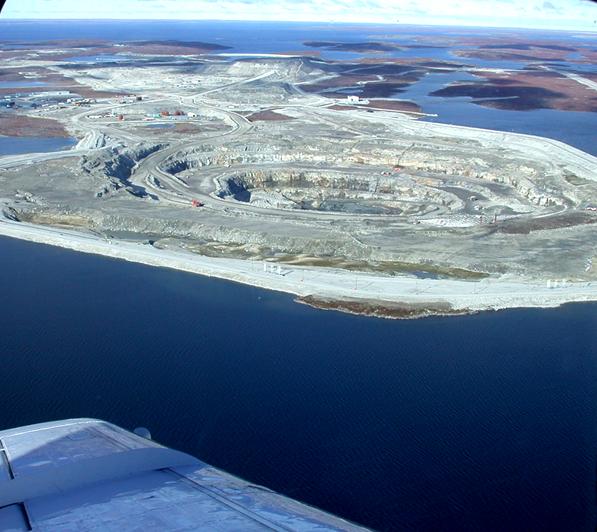
The Diavik Diamond Mine, Canada


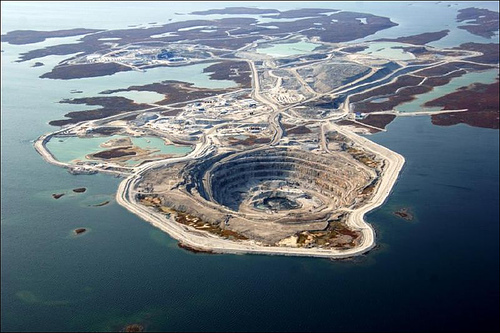
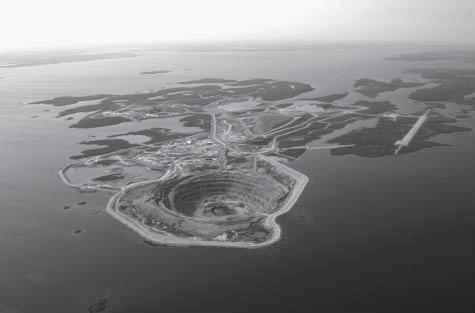
Many of the Canadian Diamonds which we offer are manufactured using diamond rough which was sourced from the Diavik Diamond Mine which is located on a 20 kilometer square island, informally called East Island, which is in Lac de Gras located within the Northwest Territory of Canada approximately 300 kilometers as the crow flies Northeast of Yellowknife which is the Capital of Canada's Northwest Territories. The Artic Circle is located about 220 kilometers North of the mine. The key to operating a mine in Canada's remote wilderness is a private ice road which is shared by various mining companies that are operating in the area. The road has been in operation for about twenty years and must be rebuilt annually to maintain service. Approximately 75% of the road is ice and is built over frozen lakes.

Geology: The Diavik Diamond Mine was discovered in Precambrian rocks of the Slave Geological Province. Known to host deposits of gold, copper, zinc, nickel, and now diamonds, this ancient rock is among the world’s oldest and was formed about 2.7 to 2.5 billion years ago. The Slave Geological Province has produced much of the North’s mineral wealth.

Granitic rocks predominantly underlie the area, and have been intruded into slightly older meta-sedimentary rocks, originally deposited as sandstone and shale. The geology of the project area is typical of ancient, 2.5-2.7 billion-year-old Precambrian rocks, with a mixture of metamorphosed sedimentary (metaturbidites) and granitic (e.g. granite, tonalite) rocks. The kimberlite pipes at the Diavik Diamond Mine are volcanic cores injected into the much older, granitic and meta-sedimentary rocks a mere 55 million years ago. Relatively fresh, often charred – but not petrified – wood found only in China today, has been encountered in drill core at depths up to 400 metres. Reflecting a much warmer climate at that time, the coniferous trees were uprooted and incorporated into the pipes.

What are Kimberlite Pipes?

Kimberlite is a rare rock type commonly found in carrot-shaped pipes which represent the roots of ancient, small volcanoes. A drawing of a carrot shaped kimberlite pipe appears above. Originating from over 150 km below the earth’s surface where diamonds are commonly formed, the kimberlite may bring diamonds to surface. Globally, kimberlite pipes average 12 hectares in surface area, and may reach depths of several hundred metres. The kimber pipes used by the Diavik Diamond Mine range in surface area from 0.9 to 1.6 hectares, and extend below 400 metres.

The Exploration for Diamonds

Finding diamond deposits is difficult and costly. Rather than look for the elusive and rare diamonds, geologists seek other clues. Working from tent camps, geologists conduct several types of surveys. Using geochemical surveys, soil samples are taken and panned for indicator minerals like garnets found in more abundance in kimberlite pipes. A trail of indicator minerals can lead to potential pipes. In addition, geophysical surveys are used to differentiate hidden kimberlite pipes from surrounding host rock. Computer-generated geophysical data is mapped as pictured above. If a potential kimberlite target is identified, portable diamond drills are used to remove core samples to determine if the target is in fact kimberlite. Further drilling helps define pipe size and shape, and provides additional rock for diamond testing. Not all kimberlite pipes have diamonds. In fact, of the worlds estimated 5,000 kimberlites only 23 contain enough diamonds to warrant the expense of operating a mining operation. When diamonds are found in sufficient quantities to suggest an ore body, a small mining operation is conducted to remove a larger, several thousand tonne bulk sample. This sample is processed to remove the diamonds, which are then evaluated for quantity, quality, and size.

Lac de Gras

Aboriginal people named the Lake Ekati for quartz veins found in local bedrock outcrops resembling caribou fat. Lac de Gras is 60 kilometers long and averages 16 kilometers wide with a shoreline length of 740 kilometers. The lake averages 12 meters in depth and has a maximum depth of 56 meters. The water temperature ranges from 0°C to 18°C in the summer. Aquatic productivity is low due to low nutrients, low light during the winter, eight months of ice and low water temperatures. The water quality resembles distilled water. The lake is habitated by lake trout, cisco, whitefish, artic grayling, burbot, longnose sucker and slimy sculpin. The lake has a drainage area of about 4,000 square kilometers and together with Lac du Sauvage located to the Northeast form the headwaters of the Coppermine River which flows 520 kilometers from Western Lac de Gras to the Artic Ocean.

The Region

Rolling tundra surrounds the Diavik Diamond Mine. The region was originally named the “Barren Lands” by early explorers due to its lack of trees. The area includes numerous lakes, bedrock outcrops and glacial deposits of boulders, till, and eskers. What little soil is found is of cryosolic order – formed where permafrost occurs within 1-2 metres of the surface – and is characterized by layers that are disrupted, mixed, or broken, by freeze-thaw activity.

Vegetation

Vegetation includes dwarf birch, northern Labrador tea, blueberry, mountain cranberry, and bearberry, with willow, sphagnum moss, and sedge tussocks dominating wet lowlands.

Wildlife

Mammal species that inhabit the region include, grizzly bears, wolves, foxes, arctic hare, ground squirrels, and wolverines. In spring and fall, portions of the Bathurst caribou herd migrate through the region. 84 bird species and 16 mammal species are summer visitors or permanent residents.

Chronological History of the Diavik Mine

*1991- 1992 Aber stakes mineral claims
*March 1992 Exploration begins
*June 1992 Aber Resources, Kennecott Canada Exploration form Diavik joint venture
*1994-1995 Pipes A-21, A154-South, A154-North and A418 discovered
*February 1996 75-person exploration camp erected for underground bulk sampling
*July 1996 5,900 tonne bulk sampling of A418 and A154 South pipes completed
*December 1996 Diavik Diamond Mines Inc. created with head office in Yellowknife
*March 1997 Bulk sample transported over winter road to Yellowknife for processing. Approximately 21,000 carats of diamonds recovered
*June 1997 Environmental baseline studies completed
*September 1997 Pre-feasibility study completed
*March 1998 Project description submitted to Federal Government triggering formal environmental assessment review under the Canadian Environmental Assessment Act
*September 1998 Environmental Assessment Report submitted and Comprehensive Public Involvement Plan initiated
*November 1999 Federal Government approves project for permitting and licensing
*September 2000 Diavik Diamond Mines Inc. receives all necessary permits and licenses to bring mine into production
*December 2000 Investors of Rio Tinto plc and Aber Diamond Corporation approve $1.3 billion expenditure to build mine
*January 2001 Mine construction begins October 2001 A154 dike earthworks completed
*July 2002 A154 dike completed, dewatering commences
*December 2002 Mine virtually complete
*January 2003 Diamond production begins
*May 2003 First million carats
*May 2003 1.9 million accident-free hours
*April 2003 Aber’s first sale of rough diamonds
*July 2003 Rio Tinto Diamonds’ first sale of rough diamonds


If you like this post just click here Posted By crkota with No comments

'Goldilocks' planet

Astronomers say they have for the first time spotted a planet beyond our own in what is sometimes called the Goldilocks zone for life: Not too hot, not too cold. Juuuust right.
Not too far from its star, not too close. So it could contain liquid water. The planet itself is neither too big nor too small for the proper surface, gravity and atmosphere.
It's just right. Just like Earth.
"This really is the first Goldilocks planet," said co-discoverer R. Paul Butler of the Carnegie Institution of Washington.
The new planet sits smack in the middle of what astronomers refer to as the habitable zone, unlike any of the nearly 500 other planets astronomers have found outside our solar system. And it is in our galactic neighborhood, suggesting that plenty of Earth-like planets circle other stars.
Finding a planet that could potentially support life is a major step toward answering the timeless question: Are we alone?
Scientists have jumped the gun before on proclaiming that planets outside our solar system were habitable only to have them turn out to be not quite so conducive to life. But this one is so clearly in the right zone that five outside astronomers told The Associated Press it seems to be the real thing.
"This is the first one I'm truly excited about," said Penn State University's Jim Kasting. He said this planet is a "pretty prime candidate" for harboring life.
Life on other planets doesn't mean E.T. Even a simple single-cell bacteria or the equivalent of shower mold would shake perceptions about the uniqueness of life on Earth.
But there are still many unanswered questions about this strange planet. It is about three times the mass of Earth, slightly larger in width and much closer to its star — 14 million miles away versus 93 million. It's so close to its version of the sun that it orbits every 37 days. And it doesn't rotate much, so one side is almost always bright, the other dark.
Temperatures can be as hot as 160 degrees or as frigid as 25 degrees below zero, but in between — in the land of constant sunrise — it would be "shirt-sleeve weather," said co-discoverer Steven Vogt of the University of California at Santa Cruz.
It's unknown whether water actually exists on the planet, and what kind of atmosphere it has. But because conditions are ideal for liquid water, and because there always seems to be life on Earth where there is water, Vogt believes "that chances for life on this planet are 100 percent."
The astronomers' findings are being published in Astrophysical Journal and were announced by the National Science Foundation on Wednesday.
The planet circles a star called Gliese 581. It's about 120 trillion miles away, so it would take several generations for a spaceship to get there. It may seem like a long distance, but in the scheme of the vast universe, this planet is "like right in our face, right next door to us," Vogt said in an interview.
That close proximity and the way it was found so early in astronomers' search for habitable planets hints to scientists that planets like Earth are probably not that rare.
Vogt and Butler ran some calculations, with giant fudge factors built in, and figured that as much as one out of five to 10 stars in the universe have planets that are Earth-sized and in the habitable zone.
With an estimated 200 billion stars in the universe, that means maybe 40 billion planets that have the potential for life, Vogt said. However, Ohio State University's Scott Gaudi cautioned that is too speculative about how common these planets are.
Vogt and Butler used ground-based telescopes to track the star's precise movements over 11 years and watch for wobbles that indicate planets are circling it. The newly discovered planet is actually the sixth found circling Gliese 581. Two looked promising for habitability for a while, another turned out to be too hot and the fifth is likely too cold. This sixth one bracketed right in the sweet spot in between, Vogt said.
With the star designated "a," its sixth planet is called Gliese 581g.
"It's not a very interesting name and it's a beautiful planet," Vogt said. Unofficially, he's named it after his wife: "I call it Zarmina's World."
The star Gliese 581 is a dwarf, about one-third the strength of our sun. Because of that, it can't be seen without a telescope from Earth, although it is in the Libra constellation, Vogt said.
But if you were standing on this new planet, you could easily see our sun, Butler said.
The low-energy dwarf star will live on for billions of years, much longer than our sun, he said. And that just increases the likelihood of life developing on the planet, the discoverers said.
"It's pretty hard to stop life once you give it the right conditions," Vogt said.


If you like this post just click here Posted By crkota with No comments
  • Popular
  • Categories
  • Archives