Get widget

News

All kinds of news around the world in one place!

Studies

Explore with us and enjoy in that!

Encyclopedia

Start with us a journey through world of knowledge!

Travel

The world is beautiful. Let's peek into some magnificent places, and see what they offer!

Entertainment

Fun - because we have the right to be happy!

Lifestyle

Our life is adventure. Enjoy in every moment of that!

TOP 10

Amazing lists of incredible things!

Kirkuk (Karkuk) - Iraq


Kirkuk is the largest Azeri city in Iraq. The Turkic population speaks the Southern dialect of the Azeri language, and besides Kirkuk this Turkic population is to be found in the Erbil, Mosul/Ninawa and Deyalah provinces. In tows and villages southeast from Kirkuk, large numbers of Azeris live as far as Al Miqdadiyah, Khanqin, and Mandali. Azeri speakers in Iraq are usually mentioned as Turkman, Turkmen or Turkoman, they use the Arabic script and many have Arabic or Kurdish as a second language.

The first Turkman were brought to Iraq by the Ommiad ruler Ubeydullah bin Ziyad in 54 Hegira. The invasion of Iraq by the Seljuk ruler Tugrul Bey in 1055 marked the beginning of Turkish control that lasted till 1918. The 11th and 12th centuries saw the strongest flux of Turkman settlers to Mesopotamia. Wars and the resulting treaties in the area eventually separated the Azeris in Iraq and Azerbaijan. Their languages, sharing the same root - the Oghuz group of Turkic languages - however, stayed basically the same. Furthermore, several important Azeri revered intellectuals - classical poets and scientists - are buried in Iraq. Several towns and villages found around Kirkuk bear the sames names as towns in Azerbaijan, such as Aghdash, Aghdam, Bilava, Aghsu, Guruchay, Boyat, Garabagh, Garagoyunlu, Amirli, Yayji, Yandija, Mardinli, Uchtapa, Khasa , Khasadaghli Chardakhli.

Calling the Azeri speakers "Turkman" dates from the Seljuk period. Currently the Turkman are represented by the 'Turkman Front', established in 1995 joining several Turkman political and social organizations. The Turkman community's two main parties are divided in their support. One works in co-operation with the Kurdish authorities, the other is backed by Turkey and opposes a Kurdish state in northern Iraq - especially one that would adopt Kirkuk as its capital.

Turkey has tried to exert a strong influence on the Turkman, and often written Turkish is used by the Turkman, as opposed to the traditional Southern-Azeri dialect which predominates in the spoken form. In spite of this, from the Arab point of view, the language of the Iraqi Turkman is regularly mentioned simply as Turkish. The number of Turkman is estimated a 2.0-2.5 million - the third largest ethnic group in Iraq after the Arabs and Kurds. Historically, the Turkman formed a cultural buffer zone between the Arabs in the South and the Kurds in the north.

Under the Iraqi constitution of 1925 both Turkman and Kurds had the right to use their own languages in schools, government offices and press. By 1972 the Iraqi government prohibited the both the study of the Turkman language and the Turkman media and in 1973 any reference to the Turkman was omitted from the provisional constitution. During the 1980's the regime of the Baath party prohibited even the public use of the Turkman language and the constitution of 1990 only states the the "people of Iraq consists of Arabs and Kurds".
In 2003 the collapse of Saddam Hussein's Baathist government brought new possibilities to the Turkman community that will have to be materialized in a difficult context, balancing the interests of Turkey and of the global super-power.

Kirkuk is located in northern Iraq, about 250 km north of the capital Baghdad near the foot of the Zagors Montains. Railway lines provide good connections with Baghdad and Arbil. Kirkuk has a population of over 600.000 and is the capital of the Al-Tamin governorate (muhafazah). Until 1974 the city was the capital of the Kirkuk governorate, which was reduced to a quarter of its original size by the Baghdad government, as a way of controlling the influence of the Azeri speaking population. The Iraqi government has also been very active in settling Arabs in the area as a way of inverting the ethnic balance. Turkman leaders say thousands of their community were forced into destitution in northern Iraq, while up to 20,000 made their way illegally to Europe throughout the 1990s. Currently Kirkuk still has a Turkman majority but the Kurdish and Arab communities are also important.

In post-Saddam Iraq, Kirkuk reveals some symptoms of becoming the centre of a struggle between the Turkmen and the Kurds, both of whom aspire to domination in the area.


The first commercial oil field in Iraq was developed in Kirkuk in 1927. Today Kirkuk is at the centre of one of the richest oil producing areas in the middle east, and pipelines connect it to the Mediterranean ports of Tripoli in Lebanon and Yumurtalik in Turkey. However the oil industry was affected first by the war with Iran and later by the American aggression and blockade. The area has also an textile industries and a strong agricultural sector, producing wheat, barley, fruits and sheep.


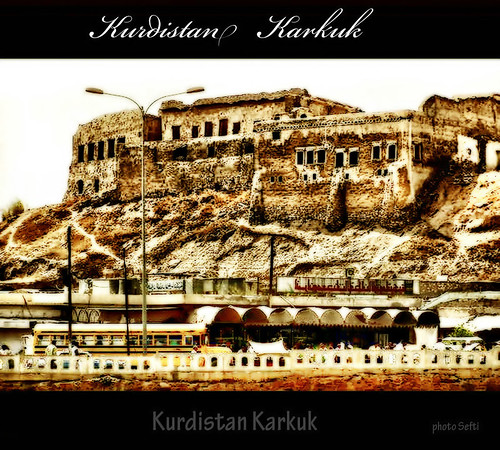
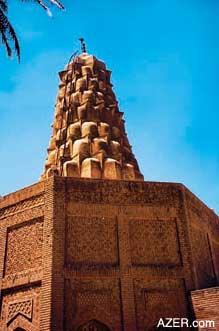
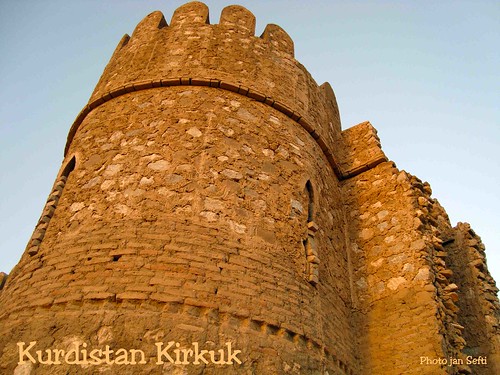
The city is built by the Hasa river on an area with archaeologic remains over 5000 years old, the city reached great prominence in the 10th and 11th centuries, under Assyrian rule when it was known as Arrapha. The oldest part of the town is clustered around a citadel built on an ancient tell, or mound. Saddam Hussein's government had some unpleasant interventions in Kirkuk's architecture, including the demolition of the Muhammediye Mosque, but the city is well worth visiting for the many ancient buildings and specially for the castle and citadel, and the 6th century Nabi Danial mosque located in the old quarter. Don't miss the ethernal fire at Babagurgur.

Outside Kirkuk

Qalat Jarmo:
Located east of Kirkuk, Qalat Jarmo is an important prehistoric archeological site. The site became knwon for revealing traces of one of the world's first village farming communities. The approximately dozen layers of architectural building and renovation yeild evidence of domesticated wheats and barley and of domesticated dogs and goats, suggesting the achievement of a settled agricultural way of life. Other artifacts found at Qalat Jarmo, such as flint sickle blades, milling stones, and - in the uppermost layers only - pottery, hint at the technological innovations made in response to the new way of food production. The original occupation of the site is estimated to have occurred at about 7000 BC.

Nuzu:
Modern Yorghan Tepe, Nuzu is an ancient Mesopotamian city, located southwest of Kirkuk. Excavations revealed revealed material extending from the prehistoric period to Roman, Parthian, and Sasanian periods. In Akkadian times (2334 BC to 2154 BC) the site was called Gasur; but early in the 2nd millennium BC the Hurrians, of northern Mesopotamia, occupied the city, changed its name to Nuzu, and during the 16th and 15th centuries BC built there a prosperous community and and important administrative centre.

Excavations in Nuzu uncovered excellent material for a study of Hurrian ceramics and glyptic art. An especially outstanding type of pottery, called Nuzu ware (or Mitranni ware) because of its original discovery there, was characterized by one primary shape - a tall, slender, small-footed goblet - and an intricate black and white painted decoration. In addition to these extraordinary ceramic artefacts, more than 4,000 cuneiform tablets were discovered at the site. Although written mostly in Akkadian, the majority of the personal names are Hurrian, and the Akkadian used often shows strong Hurrian influence. The Nuzu material also made possible an insight into specific Hurrian family law and societal institutions and clarified many difficult passages in the contemporary patriarchal narratives of the Book of Genesis.


If you like this post just click here Posted By crkota with 1 comment

Japanese fishing trawler sunk by giant jellyfish


A 10-ton fishing boat has been sunk by gigantic jellyfish off eastern Japan.


The trawler, the Diasan Shinsho-maru, capsized off Chiba`as its three-man crew was trying to haul in a net containing dozens of huge Nomura's jellyfish.

Each of the jellyfish can weigh up to 200 kg and waters around Japan have been inundated with the creatures this year. Experts believe weather and water conditions in the breeding grounds, off the coast of China, have been ideal for the jellyfish in recent months.

The crew of the fishing boat was thrown into the sea when the vessel capsized, but the three men were rescued by another trawler, according to the Mainichi newspaper. The local Coast Guard office reported that the weather was clear and the sea was calm at the time of the accident.

One of the largest jellyfish in the world, the species can grow up to 2 meters in diameter. The last time Japan was invaded on a similar scale, in the summer of 2005, the jellyfish damaged nets, rendered fish inedible with their toxic stings and even caused injuries to fishermen.

Relatively little is known about Nomura's jellyfish, such as why some years see thousands of the creatures floating across the Sea of Japan on the Tsushima Current, but last year there were virtually no sightings. In 2007, there were 15,500 reports of damage to fishing equipment caused by the creatures.

Experts believe that one contributing factor to the jellyfish becoming more frequent visitors to Japanese waters may be a decline in the number of predators, which include sea turtles and certain species of fish.

If you like this post just click here Posted By crkota with No comments

Labyrinth and Minotaur


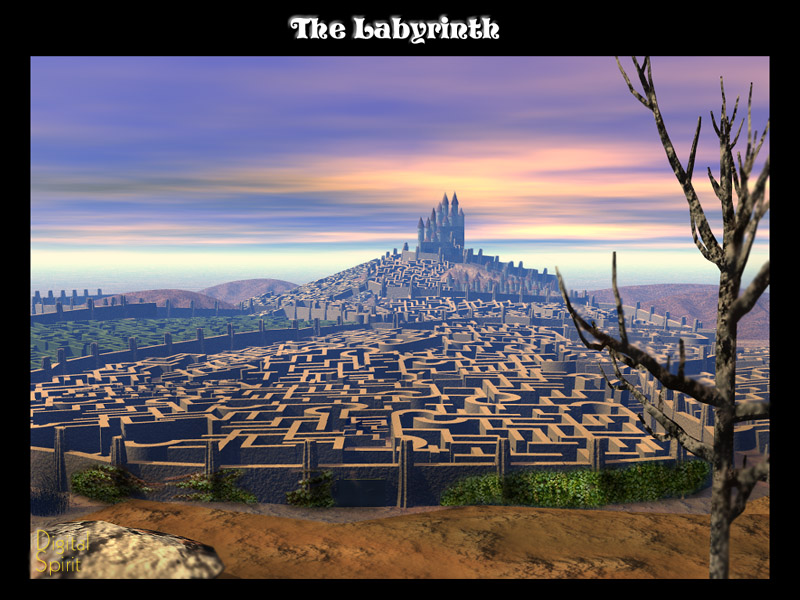
Labyrinth

Greek legend would have us believe that when King Minos (son of Zeus) came to the Cretan throne his brothers weren’t too chuffed so, in order to prove his right to the crown he ’sent an ancient email’ (prayed to Poseidon, God of the Sea) to give a sign of approval. He asked that a white bull be sent to him as confirmation and promised that if that sign of approval was sent, he’d sacrifice the bull in Poseidon’s honour.

Poseidon duly obliged but Minos decided he rather liked the little white bull (now’s the time for all of you over 45 to burst into song with your impressions of Tommy Steele (at least here in the UK)!!) so decided to sacrifice the best bull from his herd instead. Obviously not the sharpest chisel in the tool box – even I know you don’t tangle with the gods! – it goes without saying that Poseidon wasn’t best pleased so he punished Minos by forcing Pasiphae, Minos’ wife, to fall in love with the white bull. She arranged for the architect Daedalus to make a wooden cow, she then climbed into it and fooled the white bull into mating with her – just hope she made sure there weren’t any splinters! From this mating Pasiphae produced a child that had the head and tail of a bull but the body of a man, and this monstrosity scared the Cretans to such an extent that Minos summoned Daedalus to his Court and commissioned him to make a labyrinth so big and complex that it’d be impossible to escape from it.

Once it had been completed, Minos and his Merry Men, captured the minotaur and locked him in the labyrinth but every so often, seven youths and maidens were gathered from Athens and sent into the maze for the minotaur’s delectation and delight! When it came to the the third sacrificial anniversary, the Greek hero Theseus (the product of a menage a trois – his mother Aethra had entered into a bit of hanky panky with Poseidon and Aegeus on the same night!) volunteered to go into the maze as part of the picnic hamper and kill the minotaur to prevent more of his fellow Athenians being led to the slaughter.

On arriving on Crete, Theseus met Ariadne, Minos’ daughter, who fell in love with him and told him that, provided he agreed to marry her, she would let him into the secret of getting out of the impenetrable maze with all his bits intact. He agreed to the arrangement, so she gave him a ball of thread, he tied one end of the thread securely at the entrance to the maze and, as he walked through, he slowly unwound it. Once he’d come across the minotaur which, by some miracle, happened to be taking a snooze, he beat it to death and then led the remaining sacrificial Athenians back to safety by rewinding the thread.

This myth has stood the test of time and many have tried to discover the site of the Minoan palace and the labyrinth. This yearning for the truth behind the ancient tale, was fuelled by a wealthy English archaeologist, Arthur Evans who visited Crete and excavated and partially reconstructed the site at Knossos between 1900 and 1935. Now, over half a million people a year visit the ruins and are told that this was the site of King Minos’ palace and consequently the most likely location of the mighty labyrinth so it’s little wonder that other sites in the area are shoved on the back burner, but a group of English scholars from Oxford University joined forces with the Hellenic Speleological Society and spent the last summer delving into a medley of tunnels and caves discovered in a disused quarry just 20 miles up the road.

Gortyn, in southern Crete. was at one time the Roman capital of the island. The archaeologists discovered that the caves at Gortyn (known locally as the Labyrinthos Caves) had been visited by ‘archaeological thieves’ – basically less energetic and rugged Indiana Joneses or less buxom and scantily clad Lara Crofts! – who were on the verge of blowing the whole thing sky high by dynamiting one of the inner chambers in the hope of finding treasure but thankfully our archaeological heroes arrived just in the nick of time!

The caves run to about two and a half miles and have numerous tunnels leading to wide chambers and dead end rooms which have been visited by travellers since Medieval times who were searching for the labyrinth. Unfortunately, interest waned in these a-mazing caves and was re-routed to Knossos over the last 100 years or so thanks to Arthur Evans’ excavation escapades. The caves at Gortyn then fell into neglect and even became a Nazi ammunition dump during World War 2!

Nicholas Howarth, a geographer from Oxford University who led the Anglo side of the expedition, said that the Gortyn caves had a menacing feel about them and it’d certainly be easy to become lost in the mass of tunnels and chambers so there seemed to be no reason why Gortyn couldn’t have been the location of the cave maze. He believes the main reason Knossos had remained so highly regarded as the labyrinth site was due to Arthur Evans who had the wealth and clout to promote the area once he’d excavated and partially reconstructed it.

But before you make up your mind which is the most likely site, Nicholas Howarth has also said there may be a third option; at Skotino on the Greek mainland but little’s known about this at the moment.

The fact of the matter is that there’s no real evidence that King Minos’ palace, the labyrinth or the minotaur existed – it’s purely a myth.

Andrew Shapland, the curator of Greek Bronze Age at the British Museum in London added his two penn’orth by saying that Knossos is mentioned by Homer (the Greek poet, not Simpson!) so it seems more likely that if in fact this myth was a reality then Knossos would be the favoured site.


Minotaur

According to Greek myth, there was only one Minotaur - the child of Pasiphae, Queen of Crete and wife of King Minos, and a white bull sent by the sea god Poseidon.

The Minotaur had the body of an enormous human, with the head and shoulders of a bull. His body - particularly the animal parts - was covered in brown hair, and his horns were wickedly sharp, with a span wider then a man's outstretched arms. Given his fearsome reputation, it seems likely that he measured around 10 ft (3 m) high.

King Minos trapped his stepson in the great Labyrinth below the palace of Knossos and kept the Minotaur satisfied by feeding him 14 young men and women exacted as tribute from the Athenians. According to one version of legend, this tribute was made every nine years, suggesting the Minotaur could live off stockpiled nutrient reserves for long periods of time. However, other versions suggest the tribute was annual, or that Minoans were slaughtered instead of Athenians eight years out of nine.

The Minotaur was probably about 30 when the Athenian hero Theseus came to Knossos, entered the maze-like Labyrinth where the Minotaur lived and killed it, and was at his physical prime. This suggests a total lifespan of around 50 years.

Many observers said that the Minotaur was invulnerable to any weapon but his own horn driven through his brain. This is probably an exaggeration, although a Minotaur's size, speed, strength and ferocity, combined with a pair of deadly horns, must have made it a formidable adversary.

Knosses was destroyed by some form of cataclysm around 1450 BCE. Barbarian invasion from the mainland was once the favored explanation, but now a volcanic eruption and subsequent tidal wave are thought to have been responsible. By 1100 BCE, the Minoan civilization had faded.

In art and mythology, at least, the Minotaur lives on. Theseus and the Minotaur were favorite subjects for painters and craftsmen of ancient Greece. The tale continues to be one of the most popular of ancient legends. In the Middle Ages, Dante imagined the Minotaur as the brutal guardian of the Seventh Circle of Hell, a symbol of perversion.

If you like this post just click here Posted By crkota with 1 comment

Great White nearly bit in half !!!!

A 'monster' great white shark measuring up to 20 ft long is on the prowl off a popular Queensland beach, according to officials.

Swimmers were warned to stay out of the water off Stradbroke Island after the shark mauled another smaller great white which had been hooked on a baited drum line.

The 10-foot great white was almost bitten in half.

The fictional shark at the centre of the Steven Spielberg blockbuster Jaws was estimated to be just five feet longer.

'It certainly opened up my eyes. I mean the shark that was caught is a substantial shark in itself,' says Jeff Krause of Queensland Fisheries.

The great white, the most dangerous creature in the sea, was still alive when hauled onto a boat near Deadman's Beach off north Stradbroke island.

News of the shocking attack on the smaller shark has sent jitters along the Queensland coast from Stradbroke Island, near Brisbane, to the Sunshine Coast further north down to the tourist mecca of Surfers Paradise, south of Brisbane.

'Whatever attacked and took chunks out of this big shark must be massive,' said 19-year-old surfer Ashton Smith. 'I've heard about the big one that's lurking out there somewhere.

'We're all being very, very cautious.'

Mr John Gooding, who operates a charter fishing boat, said sharks were everywhere, although there appeared to be no specific reason for an increase in the number.

'Some days you struggle to get a fish on to the boat before the sharks take them,' he told the Courier Mail newspaper.

Many of the popular beaches in Queensland are protected by nets and what are known as drumlines - a series of baited hooks that hang from buoys placed in a line about 500 yards from beaches.

Since the net and drumline programme was introduced in Queensland there has been only one fatal attack on a protected beach.

The relatively recent attack occurred when 21-year-old student Sarah Whiley was killed off Stradbroke Island three years ago.

The Queensland State Government has been under pressure in recent weeks to scale down the shark net and drumline programme because environmentalists say that whales and other big fish are becoming trapped in the nets.

But Fisheries Minister Tim Mulherin said the capture of the badly injured 10ft shark - and the indication of a much larger one being in the area - showed the necessity to keep the nets and drumlines in place.

Darren Kindleysides, director of the Australian Marine Conservation Society, said the nets were working but at huge cost to whales, dolphins and turtles.

And Vic Hislop, an internationally-recognised authority on sharks, also believes the nets should be removed and other methods explored to scare away the predators.

If you like this post just click here Posted By crkota with No comments

The Ica Stones of Peru

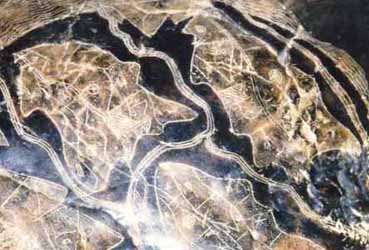
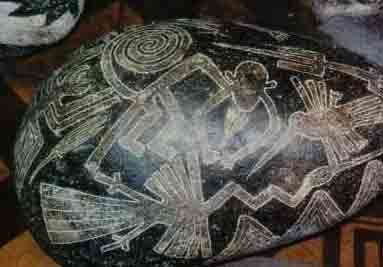
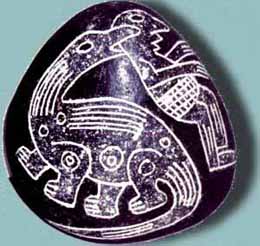
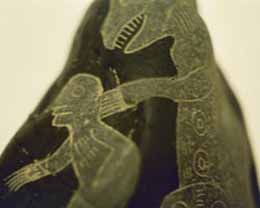
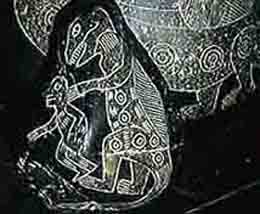
One of the great enigmas of planet Earth revolves around a collection of approximately 15,000 pre-Columbian artifacts, the ancient carved glyph rock library known as the Ica Stones.

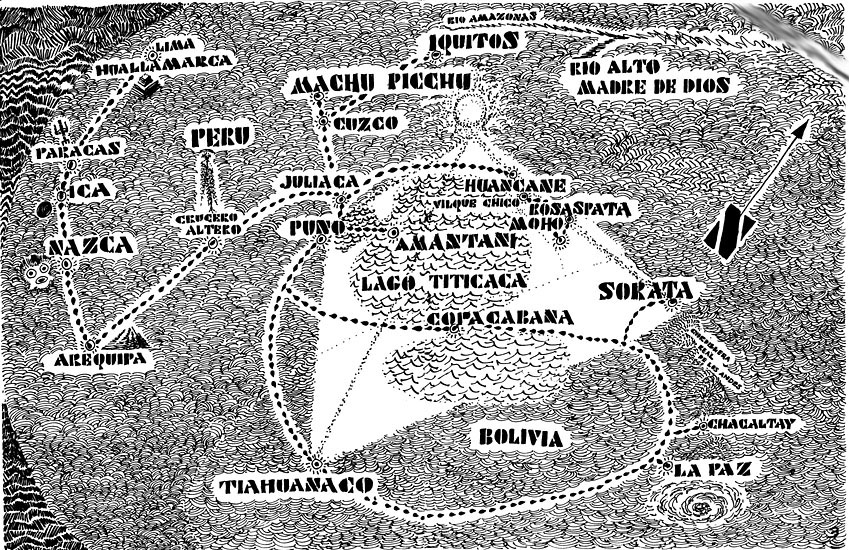
They are carved stones supposedly found in a cave in the coastal desert city of Ica, Peru. Ica is a relatively small area, some 300 kilometers from Lima. In the 1960's a farmer claimed to have found piles and piles of rocks deep in various gorges and caves not far from the Nazca Lines. Some were also buried slightly under the ground. The native farmer produced only bags of stones at first, but later, he produced literally thousands of the artifacts. For some time he made a good living selling the stones to tourists. The farmer became something of a celebrity. Word traveled in the archeological world, and experts descended on Ica.

As the story goes ... The Peruvian government took an interest in the stones. They did not Peru to become another Egypt, overrun with diggers and robbers. They had enough of them already. No one knows what was said to the farmer but after arrest and confinement, he suddenly admitted in writing that the stones were hoaxed and that he had carved the stones himself. He was going to bilk the tourists and never realized it would get out of hand.

In 1966, Dr. Javier Cabrera, the town's physician, received a small, carved rock for his birthday from a native. The carving on the rock looked ancient to Dr. Cabrera, but intrigued him because it seemed to depict a primitive fish.

Dr. Cabrera became the prime customer for the stones, and the farmer apparently had an endless supply. Dr. Cabrera questioned the farmer about carving the stones. The farmer was evasive and maintained his story about created them himself for fear of being arrested again and put in jail for the rest of his life.

When Dr. Cabrera had bought a few thousand he wanted to know how many there were in total. The farmer seemed to produce more every week. Cabrera was beginning to believe that he had fallen prey to this farmer, and the man had created them himself. The farmer refused to discuss how he made the stones. Logically Dr. Cabrera figured that the farmer would have had to carve one stone every day for over 40 years to produce the total library! This could not be possible. Dr. Cabrera set out to find answers about his Ica Stones based on the designs on the stones.

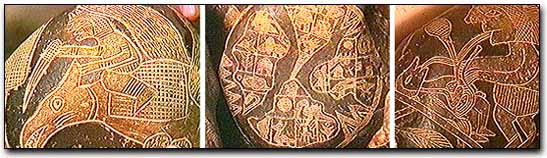
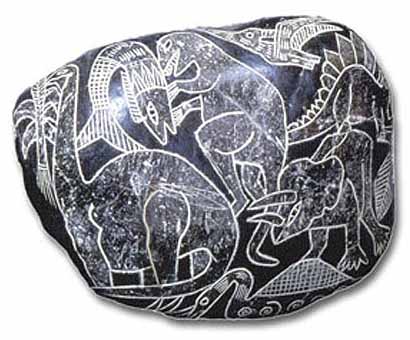
The stones come in all sizes. There are small ones that can fit in the palm of you hand. There are rocks as large as a dog. All of the stones have images that have been carved with continuous lines etched into the rock surface. The etching reveals a lighter color than the original dark varnish of age, yet the etched grooves also bear traces of this varnish, indicating that the carving was done in ancient times. They are a form of Andesite, a gray to black volcanic rock, and a very hard mineral that would make etching quite difficult with primitive tools, a local river rock, covered with a patina of natural oxidation. Laboratories in Germany have authenticated the incisions that make up the carvings as extremely ancient. Nearby fossil finds indicate the area to be replete in bone fragments millions of years old.

Unlike clay figurines that have organic material (i.e. straw) in their composition, there are no organic materials in plain old rock that will tell anything of its age. Traditional radiocarbon dating techniques rely upon organic material (that was once alive) to determine age. The surface of these rocks, however, has a varnish that is the result of bacteria and minute organisms which have adhered to them. A good black varnish or patina will take thousands of years to discolor and coat each stone. Etching these rocks would have removed the existing varnish, revealing the bare rock. Since these rocks have developed additional varnish in the grooves, it seems likely that they have were carved a long time ago.

Dr. Cabrera's library is organized by subject matter including physical and social sciences (races of man), (nature) ancient animals, geography (lost continents), and prophecy (the knowledge of global catastrophe.)

Dr. Cabrera concluded that there was no way the farmer had time, skills, nor knowledge of how to create the stones. After purchasing 11,000 stones, Dr. Cabrera became a trusted friend of the farmer. He learned that the man was released from prison once he signed the confession that he was cheating the tourists. He agreed not to pretend the stones came from the hills but that he had indeed carved them himself. It was either that or go to prison for the remainder of his life for selling government possessions (the international antiquity laws).

Dr. Cabrera continued his research with geologists to interpret the maps on several stones showing a weird configuration of the world. Some angles and land masses looked vaguely familiar, but the majority were badly skewered into strange shapes. Geologists have confirmed that based on current computer projections, the shapes indicated on the rocks are indeed accurate for the planet Earth, as it was, about 13,000,000 (million) years ago - pre-stone age.

Peru has always held a spiritual fascination for people seeking higher knowledge. It has an air of mystery about it often linked to visits by Ancient Astronauts. Much of Peru sits on a major grid point meaning the electromagnetic energies are very strong. Peru is also a coastal region - the pull of the sea always a connection for those who study metaphysics as water represents the collective flow of creation. UFO sightings are common among local natives in Peru who say that watching a ship land in the water or on the land is not unusual. Some people claim to communicate with aliens. Machu Picchu is considered by some to have been a landing strip for UFO's.

The Ica Stones will remain an unsolved mystery along with the Nazca Lines on the Plains of Peru which some believe could only have been designed as a blueprint by creational forces. This area has been thought by some to be an ancient spaceport based on the harness of electromagnetic energy for propulsion of space faring vehicles. The entire area was made up of huge iron ore deposits that concentrated magnetic energy, creating an electromagnetic field of extraordinary strength.

Who actually created the Ica Stones? Evidence seems to show they were not created by humans of the time line of their creation, but for now they remain an enigma.


If you like this post just click here Posted By crkota with 1 comment

The Secrets of Coral Castle

Did a Latvian immigrant rediscover the secrets to the building of the pyramids... of levitation... of anti-gravity? His amazing "castle" may hold clues to long-lost powers.

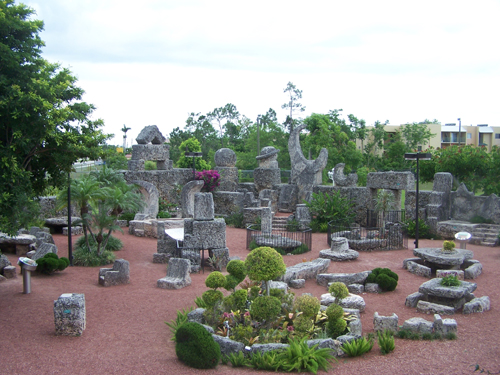
Coral Castle in Homestead, Florida, is one of the most amazing structures ever built. In terms of accomplishment, it's been compared to Stonehenge, ancient Greek temples, and even the great pyramids of Egypt. It is amazing - some even say miraculous - because it was quarried, fashioned, transported, and constructed by one man: Edward Leedskalnin, a 5-ft. tall, 100-lb. Latvian immigrant.

Many men have single-handedly built their own homes, but Leedskalnin's choice of building materials is what makes his undertaking so incredible. He used huge blocks of coral rock, some weighing as much as 30 tons, and somehow was able to move them and set them in place without assistance or the use of modern machinery. And therein lies the mystery. How did he do it?

It's estimated that 1,000 tons of coral rock were used in construction of the walls and towers, and an additional 100 tons of it were carved into furniture and art objects:
  • An obelisk he raised weighs 28 tons.
  • The wall surrounding Coral Castle stands 8 ft. tall and consists of large blocks each weighing several tons.
  • Large stone crescents are perched atop 20-ft.-high walls.
  • A 9-ton swinging gate that moves at the touch of a finger guards the eastern wall.
  • The largest rock on the property weighs an estimated 35 tons.
  • Some stones are twice the weight of the largest blocks in the Great Pyramid at Giza.

Working alone, Leedskalnin labored for 20 years - from 1920 to 1940 - to build the home he originally called "Rock Gate Park" in Florida City. The story goes that he built it after being jilted by his fiancée, who changed her mind about marrying him because he was too old and too poor. After wandering around the U.S. and Canada for several years, Leedskalnin settled in Florida City for health reasons; he had been diagnosed with tuberculosis. He began building his coral home in 1920. Then in 1936, when a planned new subdivision of homes threatened his privacy, Leedskalnin moved his entire home 10 miles to Homestead, where he completed it, and where it still stands as a tourist attraction.

How Leedskalnin managed this feat of engineering has remained a mystery all these years because, incredibly, no one saw him do it. A secretive man, Leedskalnin often worked at night by lantern light. And so there are no credible witnesses to how the small, frail man was able to move the huge blocks of rock. Even when he moved the entire structure to Homestead, neighbors saw the coral blocks being transported on a borrowed truck, but no one seems to know how Leedskalnin got them on and off the vehicle.

Lots of weird stories have been told and bizarre theories proposed to explain Coral Castle. And since no witness can dispute any of them, they are all worthy of consideration.


The Theories

  • One story says that some curious neighbors did see how Leedskalnin moved the stones. They say he placed his hands on the stone to be lifted... and sang. Somehow this levitated the great rocks.
  • According to an article in Fate magazine, "some teenagers spying on him one evening claimed they saw him 'float coral blocks through the air like hydrogen balloons,' but no one took them seriously."
  • Frank Joseph, in the Fate magazine article, also writes, "Alternative science investigators suggest that Leedskalnin somehow learned the secret of the 'world grid,' an invisible pattern of energy lines surrounding the Earth which concentrates points of telluric power where they intersect. It was here, at one of these intersections of Earth energy, that he was supposedly able to move his prodigious stone blocks using the unseen power of our planet." Yet that still does no explain how Leedskalnin was able to tap this power, and others cannot.
  • Coral Castle quotes J. Cathie, a captain flying with National Airways Corp. of New Zealand, as saying: "Measurements from the Coral Castle position to the zero-degree and 90-degree longitude lines, when they passed through the equator, also yielded harmonics related to light and gravity. The final check of the distance between Coral Castle and grid pole A in the north, dispelled any doubt about the site being in an ideal position to allow Leedskalnin to erect the huge blocks of coral with relative ease. Measurements from all major points gave the geometric harmonics necessary for the manipulation of anti-gravity." Cathie also believes that this energy grid is also responsible for many UFO sightings.
  • In an article by called "The Coral Castle Mystery" in Atlantis Rising, author Christopher Dunn asserts: "What if there's no such thing as gravity? And the natural forces we already know about are sufficient to explain the noted phenomena we have labeled as gravity? Perhaps Leedskalnin's means of working with the Earth's gravitational pull was nothing more complicated than devising a means by which the alignment of magnetic elements within his coral blocks was adjusted to face the streams of individual magnets he claims are issuing forth from the Earth with a like repelling pole."
  • When he was personally asked how he managed the feat, Leedskalnin replied only that he understood the laws of weight and leverage. He is quoted as saying, "I have discovered the secrets of the pyramids. I have found out how the Egyptians and the ancient builders in Peru, Yucatan, and Asia, with only primitive tools, raised and set in place blocks of stone weighing many tons."
  • According the The Enigma of Coral Castle, "Ed flatly disagreed with modern science, and claimed that the scientists were wrong, 'that nature is simple.' He believed all matter consisted of individual magnets, and it is the movement of these magnets within materials, and through space, that produce measurable phenomena, magnetism, and electricity. These concepts 'involved the relationship of the Earth to celestial alignments.' He claimed to see beads of light which he believed to be the physical presence of nature's magnetism and life force, or what we term today, chi."

Was Leedskalnin being deceptive when he talked about magnetism and electricity, trying to make his accomplishment more mystical and mysterious than it actually was? Had he merely found a very clever way to manipulate the great stones with levers and pulleys? We may never know the answer. Leedskalnin took his secrets with him to his grave in 1951... secrets that await to be rediscovered.


If you like this post just click here Posted By crkota with No comments

BUG 007

Spies may soon be bugging conversations using actual insects, thanks to research funded by the US military.

The US Defense Advanced Research Projects Agency has spent years developing a whole host of cyborg critters, in the hopes of creating the ultimate 'fly on the wall'.
Now a team of researchers led by Hirotaka Sato have created cyborg beetles which are guided wirelessly via a laptop.

Using implants, they worked out how to control a beetle's take-off, flight and landing by stimulating the brain to work the wings.
They controlled turns through stimulating the basilar muscles on one side or the other to make the wings on that side flap harder.
The embedded system uses nerve and muscle stimulators, a microbattery and a microcontroller with transceiver.


They were implanted in the beetles when they were at the pupal stage.
Three types of large beetles from Cameroon were used in the experiments at the University of California in Berkeley. The smallest was 2cm long, while the largest was 20cm.

According to Professor Noel Sharkey, an international expert on artificial intelligence and robotics from Sheffield University, there have been attempts in the past to control insects such as cockroaches, but this is the first time the flight of insects has been controlled remotely.
Professor Sharkey questioned the ultimate military application of remotely controlled beetles as you would also need to implant a GPS transmitter and a camera too.
This would be too heavy for even the largest beetle to carry.


The Berkeley researchers suggested the 'cyborg' beetles - part beetle, part machine - could serve as models for micro air vehicles.

Sato and colleagues also said the beetles could serve as couriers to inaccessible locations. The Berkeley team is also experimenting on dragonflies, flies and moths because of their 'unmatched flight capabilities'.
DARPA's ultimate aim is to create cyborg insects that can fly more than 300ft to their target and then stay put until commanded to buzz off again.

If you like this post just click here Posted By crkota with No comments

It's not easy to be real-life Harry Potter

Meet the real-life Harry Potter, the young man who claims his life has been made a misery by the famous wizard.

Harry Potter, 20, is forced to endure taunts from the public, police, phone companies and even one football referee because of his magical moniker.
When he was born in 1989, his mother Tracey Shaw had thought little of the name she had picked for her first child.

But eight years later when J K Rowling released Harry Potter And The Philosopher's Stone in 1997, his life was to be changed forever.

Now he suffers daily grief caused by people's reaction to his name and even had to show his girlfriend his passport so she believed him when they first met.
A bus company refused to issue him with a pass because they didn't believe he was telling them the truth when he tried to sign up.

And he has even got a scar on his forehead like the famous wizard, picked up when he ran into a lamppost aged fifteen.
In the series of seven books Harry gets his mark from arch enemy Lord Voldemort as the 'Dark Lord' tries to kill him.

Harry, from Portsmouth, Hampshire, said he wished author J K Rowling had never used his name for her books.
He said: 'My life has changed completely since the books were written. At first I thought it might be quite a good thing to have the same name.

'But now it is like someone has cast a bad spell on me. The reactions I get from people range from making fun to plain aggressive.
'Sometimes I wish J K Rowling had never used my name...
'People seem to forget that I was Harry Potter before the character. I was nine when the books first came out.
'I never imagined when my mum first brought the book home that it would take off like this.
'Whenever I was playing up at school, the teachers would make some joke about my name, which soon shut me up.
'After 12 years of it I couldn't count the amount of times I've heard "You're a wizard Harry". It does wear a bit thin after a while.
'And I've heard all the puns about my wand.'

Harry is desperate to try and live a normal life and has a less glamorous job than his namesake.
Harry's mother, Tracey Shaw, 47, an accountant from Portsmouth said: 'I named him Harry simply because I liked the name.

'People used to assume that he was named after Prince Harry, and that was his nickname when he was very young - we called him Prince Harry.
"Harry's biological father's surname was Potter and that's how Harry got his famous name.
'There was no such thing as Harry Potter at the time so I didn't have a clue the name would become so famous.'

Unlike his magical counterpart, he has shunned the Hogwarts School of Wizardry for the more mundane surroundings of Lloyds TSB.
And now he and girlfriend Philippa Hall, 18, are hoping to settle down properly and are currently trying to buy their first house together.
The seven Harry Potter novels shot British author J K Rowling to stardom, with his adventures being snapped up by 400million eager fans.

Daniel Radcliffe, the actor that plays the title character in the films, was recently revealed to have bought his third property in New York - a townhouse worth almost £4million.

Since the books were released they have spawned blockbuster films and spin-off merchandise, making the brand worth an estimated £15billion.
But the fortune made by the wizard with the same name as him, provides little comfort to Harry.

He said: 'No one ever believes that I'm telling the truth about my name. I had to show my girlfriend my passport, my bank card, and my driving license to convince her that I wasn't lying.
'I wasn't even able to get a Facebook account in my name as apparently the rights are owned by the Potter brand.
'I had similar problems getting a bus pass, and gave up in the end. They just refused to believe me.
'I'm constantly asked to send off my ID so I can prove that I am telling the truth. I think a lot of people just think I'm a smart-arse.
'Someone called me once and asked if I was Harry Potter. When I said I was, I heard a whole office full of people laughing, and then they hung up.
'I called the number back and found it was a well-known phone company.
'I was even stopped by the cops about a month ago when I drove through a red light.
'They couldn't believe it when they saw my driving license. They thought it was hilarious, but still gave me points on my license and a fine.'
'I was playing in my Sunday League team once and the referee accused me of giving him a false name, after I made a minor foul on another player.
'He asked me for my name to book me, but thought I was just playing up. He asked if I wanted to be sent off.
'You can get banned from the league for giving a fake name so it was quite worrying...

If you like this post just click here Posted By crkota with No comments
  • Popular
  • Categories
  • Archives