Get widget

News

All kinds of news around the world in one place!

Studies

Explore with us and enjoy in that!

Encyclopedia

Start with us a journey through world of knowledge!

Travel

The world is beautiful. Let's peek into some magnificent places, and see what they offer!

Entertainment

Fun - because we have the right to be happy!

Lifestyle

Our life is adventure. Enjoy in every moment of that!

TOP 10

Amazing lists of incredible things!

French Open Men's Final 2009: Federer vs. Soderling


vs


The French Open men's final 2009 match between #2 Roger Federer and #23 Robin Soderling is set to start in about a half an hour. Coverage starts at 9:00 a.m. EST on NBC.

It's been a great tournament so far with some amazing upsets and big comebacks. Especially for Soderling who knocked off #1 Rafael Nadal in the fourth round. Nadal was considered an automatic for the finals since he had won the last four French Open tournaments but Soderling was able to eliminate him in four sets. Ranked 23rd, Soderling was also able to beat #10 Nikolav Davydenko and #12 Fernando Gonzalez to reach the finals. He had to comeback from down 4 - 1 in the fifth set against Gonzalez in order to advance.

Federer on the other hand is no surprise. He was expected to make it far into the tourney and challenge for the title. However in order to get to the finals he had to make a couple incredible comebacks. In the fourth round he was down two sets to none before he clawed his way back to win three straight sets and advance to the quarterfinals. In the semifinals he got in a hole again, digging himself a deficit of two sets to one against #5 Juan Martin Del Potro. Again he was able to show some resolve and win two straight sets to advance to the finals.

It sets up to be a great match-up for the championship. I am flipping back and forth on who I want to see win. Federer on one hand has never won the French Open and this would complete his career Grand Slam. But I always like to see the underdog win, and it would be great to see Soderling win over the #2 ranked player after already beating the #1 ranked player. I think I'll be rooting for Soderling.


source

If you like this post just click here Posted By crkota with No comments

Death of actor David Carradine


Police speculated yesterday that accidental suffocation, not suicide, may have caused the death of actor David Carradine, whose body was found in a hotel closet in Bangkok with a rope tied to his neck, wrist, and genitals. The circumstances under which he died have led to speculation that the 72-year-old actor may have been engaged in a dangerous form of sex play known as auto-erotic asphyxiation.

If you like this post just click here Posted By crkota with No comments

Giant Skeletons

The mystery surrounding reports of “giant skeletons” has always intrigued and fascinated me. Specifically, how it seemed to be a common ocurrence that human-like bone remains, often of giant proportions, were known for popping up everywhere in the mid-to-late 1800s, as featured in reports like these:

During an 1879 excavation of an Indian mound near Brewersville, Indiana, a nine-foot eight inch skeleton was found buried within. Around the same time, George W. Hill, M.D., also unearthed a skeleton said to be “of unusual size” while excavating a mound in Ashland County, Ohio. In 1880, American Antiquarian, volume three, reported that a Doctor Everhart allegedly found another large skeleton “reported to have been of enormous dimensions” in a strange clay coffin along with a sandstone slab marked with unidentified hieroglyphics near Zanesville Ohio. In 1881 in Medina County, Ohio, a succession of nine bodies were found below the cellar of a house, buried as though the corpses had been “dumped into a ditch.” Albert Harris, one of the residents, was twenty years old at the time of the grave’s discovery, and removing one of the large skeletons, said that he could literally fit the piece over his entire head and allow it to rest on his shoulders like a large helmet, even while wearing a cap underneath! Still, we’ve all heard of how even well known authors of the era, including Mark Twain, contributed to the telling of “whoppers” in their day; that is, many writers who got their feet wet as newspaper writers for dailies would occasionally cook up tall tales when local news just wasn’t doing it (see a great example of this here). Eventually, I decided to try and find out if there might be any reports that could be verified with more certainty, and after some digging around in public domain archives, I found a couple.

In their 1894 report to the secretary of the Smithsonian Institute, Cyrus Thomas and Thomas Powell of the Bureau of Ethnology wrote of several discoveries where large human skeletal remains were found, the first ocurring in Roane County, Tennessee:

“Underneath the layer of shells the earth was very dark and appeared to be mixed with vegetable mold to the depth of 1 foot. At the bottom of this, resting on the original surface of the ground, was a very large skeleton lying horizontally at full length. Although very soft, the bones were sufficiently distinct to allow of careful measurement before attempting to remove them. The length from the base of the skull to the bones of the toes was found to be 7 feet 3 inches. It is probable, therefore, that this individual when living was fully 7½ feet high.”

And yet another instance, this time in presumed Indian burial mounds at Dunlieth, Illinois:

“Near the original surface, 10 or 12 feet from the center, on the lower side, lying at full length on its back, was one of the largest skeletons discovered by the Bureau agents, the length as proved by actual measurement being between 7 and 8 feet. It was clearly traceable, but crumbled to pieces immediately after removal from the hard earth in which it was encased….”

Indeed, it seems that the Smithsonian at one time reported oddities like these which they uncovered, especially during the “giant boom” of the late nineteenth century. Still, I can’t help but ask; if these kinds of discoveries were ever at all commonplace, why aren’t skeletons and other anomalies like this found more frequently in modern times… or are they?

During an email exchange I had last year with my good friend and mentor, Brad Steiger, we began discussing a few similar reports which he had included in his book Worlds Before Our Own, where a few such skeletons were said to exist in private museums. ”After the book was published, I learned of even more and included photos of them in my lectures,” he told me. ”Soon, individuals beseeched me to cease; the private museums were mysteriously suffering unexplained fires.” One is left to ask; what about anomalous relics of this (or any) sort could be so worthy of censorship on such a level?

Further complicating the mystery of missing giant bones is the following exerpt from an article I wrote which included the inquiries of the late zoologist Ivan T. Sanderson, best known for his interest in the legends regarding America’s Bigfoot and the Abominable Snowmen alleged to reside in the Himalayas:

“Sometime in the 1960s, Sanderson wrote about an odd letter he received regarding an engineer who, during World War II, had been stationed on the Aleutian island of Shemya. While building an airstrip, the bulldozing of a group of hills in the area led the engineer and his crew to unearth several sedimentary layers of human remains. They noted the extraordinary length of the crania and leg bones at the site, having apparently belonged to people of gigantic proportions. The skulls were said to have measured up to 24 inches from base to crown, far greater than the length of an average human skull. Also of interest was that each was said to have been trepanned, the strange process of drilling or cutting a hole and removing a top center portion of the skull, thought by some ancient cultures to enable a variety of alleged “benefits”, including psychic abilities, etc. Sanderson actively began to search for more proof of this incident, and later was able to contact another member of the unit who also confirmed the bizarre story. By all accounts, the remains were said to have been gathered by the Smithsonian Institution, but no record of where they were taken was ever issued. Sanderson seemed convinced that the institute did indeed retrieve them however, going so far as to ask ‘is it that these people cannot face rewriting all the textbooks?’ “

Do I honestly think that there are MIBs out there spiriting away giant skeletons into an unmarked warehouse someplace? Not at all… but I think it’s safe to suppose (at least for the sake of a good pun) that someone may have a few “skeletons in their closet” that they just aren’t talking about!

If you like this post just click here Posted By crkota with 15 comments

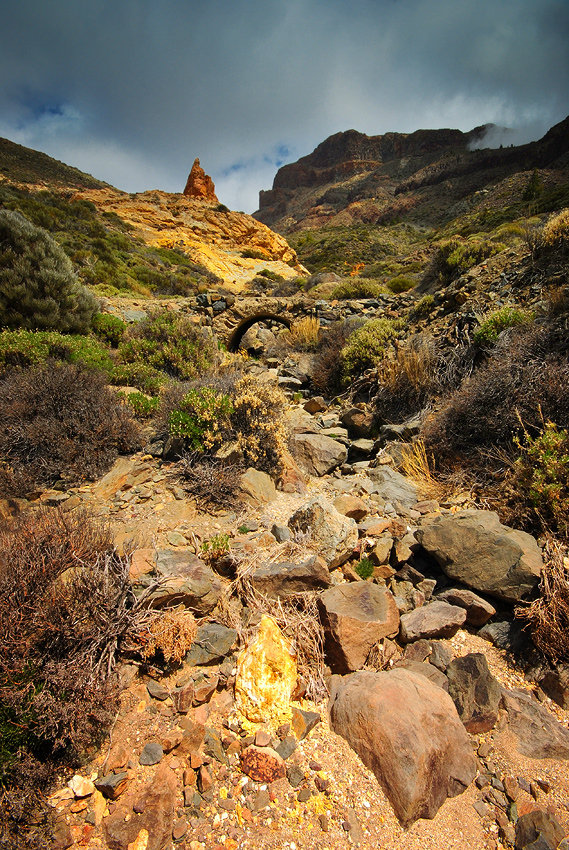
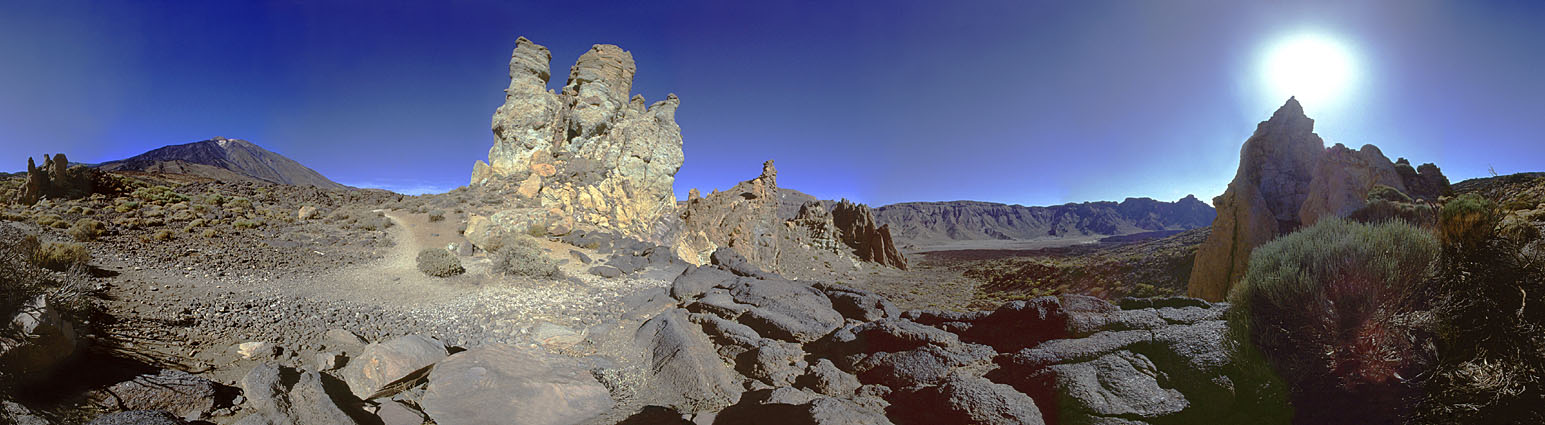
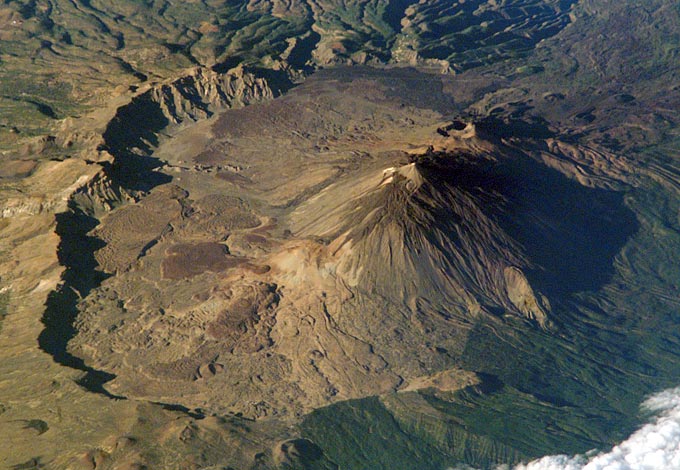
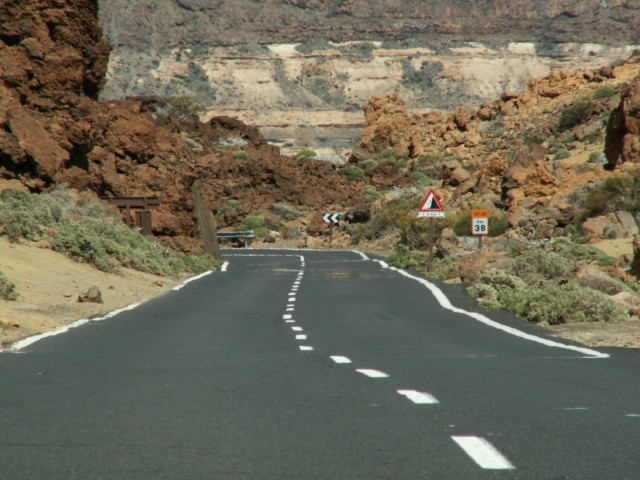
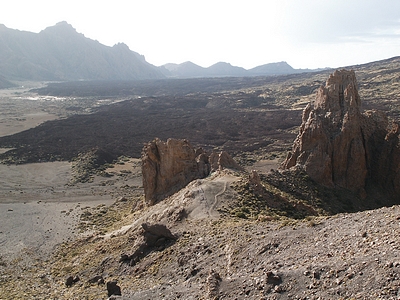
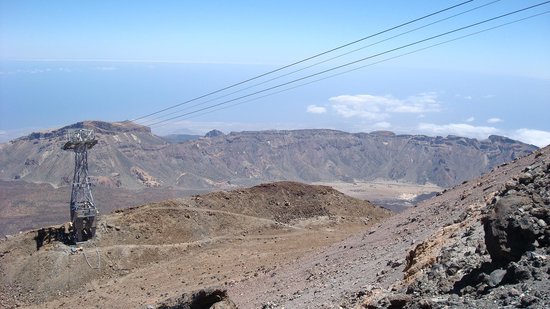
Las Cañadas, Tenerife


We wonder how many of those sex and surf tourists look at the mountain that overshadows popular party places like Playas Las Americas and ever wonder – “Will it be today?” Las Cañadas caldera, Mount Teide – Not dead just sleeping!

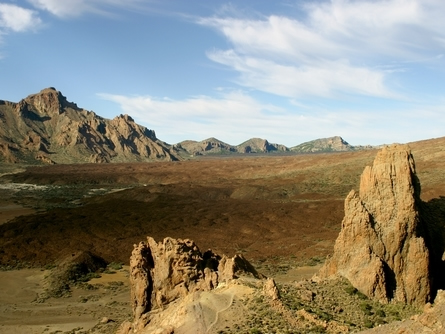
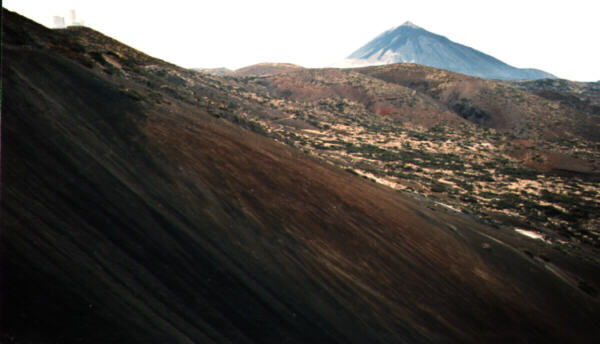
Las Cañadas caldera, located at the central part of Tenerife, Canary Islands, is a large volcanic depression (16 x 9 km). The caldera is opened to the sea at the north side and filled by continuous layers of lava flows and fall deposits. These volcanic deposits form a good hydrogeological trap which is the largest ground water reserve of the island. In comparison, the basement of the caldera has low permeability. Numerous galleries (horizontal drains) intercept the Las Cañadas aquifer. During the last century, this aquifer has been overexploited depleting the water table as well as the water quality. The Teide-Pico Viejo volcanic complex is located at the margin of the caldera. The ascent of deep magmatic gases (e.g. CO2) confers aggressiveness to the waters causing rock dissolution and alteration. The aim of this work is to study water-rock interactions in Las Cañadas aquifer. Chemical diagrams showing the relative composition of Mg, Ca, Na and K as described by Giggenbach (1988) indicate that the waters discharged by the galleries correspond to the process of rock dissolution and evolution towards full rock-fluid equilibrium. The lower contents in Ca and Mg are found in the galleries which reach more deeply the north flank of the Teide Volcano, suggesting mineral precipitation and heating in this zone. Geochemical modeling of fluid-rock interactions using Chiller (Reed and Spycher, 1984) show that the gases discharged at Teide summit cannot generate the water compositions observed at Las Cañadas. These gases represent the separated phase of a condensation process within the volcanic edifice. Modeling of the gas-enriched Las Cañadas waters from the recharge zone with phonolitic rocks from the caldera show that the galleries waters correspond to the dissolution of 1 to 7 g of rock/liter of water and a relatively shallow circulation. The simulations suggest that waters have not encountered the ˜ 250° C temperature region suggested by the gas geothermometers. This behavior suggests that the heat source in this system is deep as suggested by geophysical studies.

At the summit of Mount Teide, one of the largest Island volcanoes in the World is the Las Cañadas caldera. The crater, which is an enourmous sixteen kilometres across, is a picture of what Hell might look like if it cooled a little. Shear walls that formed when the caldera first collapsed encircle this dry and alien place. And, with an arrogance than can only be accepted as typical, humanity has built roads and observatories across this no mans land that is little more than a plug over a sleeping yet still active and very large volcano. When we visited it some years ago we were standing in the viewing gallery when the ground beneath our feet trembled and several windows suddenly cracked. The sleeping giant was grumbling in its sleep. The land mass created by the volcano is Tenerife in the Canary Islands.source 1 2

If you like this post just click here Posted By crkota with 2 comments

The top 10 most dangerous internet search terms

Users surfing the web for song lyrics, free music tracks and screen savers are most at risk of accidentally downloading malicious software, a study has found.

Many of the websites purporting to contain this content also harbour virus, Trojans and other malware, the computer security experts at McAfee found. As a result, many web users are unwittingly exposing themselves to dangerous content that could compromise their machine and even lead to hackers and cybercriminals gaining access to their personal information or banking login details.

Among the most dangerous search terms were “free music downloads”, which carried a 20.7 per cent risk of exposing web users to malicious software, “game cheats”, which carried a 16.7 per cent risk, “word unscrambler”, which carried a 16.1 per cent risk, and “lyrics”, which carried a 14.8 per cent risk.

McAfee also analysed the risk levels by search category, and found that “screensavers” was the riskiest group of products to search for online, with a 34.4 per cent chance of exposing web users to malware, while searches for “free games” carried a 6.8 per cent risk.

Other dangerous search terms included “iPhone”, “Jonas brothers” and “Rhianna”.

“The web is a great resource, but consumers need to understand that it has risks,” said Shane Keats, a research analyst at McAfee. “Those risks are magnified if you search in popular categories.”

McAfee’s report said that cybercriminals were becoming increasingly savvy about finding new ways to ensnare web users, and that targeting keywords associated with downloading content was one of the most-used.

“One key tool cybercriminals use to snare victims is to get them to download a computer file or program that comes with a malicious payload,” said the report.

“Hackers are most successful when they can attract a large number of victims. One way to target big crowds online is to track current events – everything from celebrity meltdowns and natural disasters to holidays and popular music.”

The McAfee study analysed more than 2,600 popular keywords from a wide variety of sources, including Google Zeitgeist, a tool that monitors hot search terms.

If you like this post just click here Posted By crkota with No comments

Could Hugh Hefner Sell Playboy?


Hugh Hefner is reportedly lining up British billionaire Richard Branson to take over his Playboy empire.

Hefner's company - founded 56 years ago - is battling the recession and the rise in internet pornography, with the firm recently posting losses of $13 million for the first three months of 2009.

Sources suggest the 83-year-old is thinking of retiring and courting Virgin boss Branson as a potential buyer - with a price-tag set at $300 million .

A Playboy spokesperson denies any offers have been made, but admits Hefner would "listen to proposals that could create value for all of our shareholders".

If you like this post just click here Posted By crkota with No comments

Dinosaur skulls sold at auction

Two dinosaur skulls have fetched top prices at an auction in New York.

A giant 65-million-year-old Triceratops skull sold at Bonhams' Natural History auction for $242,000 (£148,000).

A skull from a cousin of the T. rex, the Alioramus remotus, went for $206,000 (£126,000). Both sold for almost double the original estimates.

The auction house would not reveal the buyers, but said the bones could end up as home ornaments.

'Like a sculpture'

The Triceratops skull, which was more than 80% intact, measured some 5.5ft (1.7m) long and had eye sockets the size of dinner plates.

Much smaller than a typical Triceratops head, it is thought to have belonged to a young dinosaur who died of an infection, the New York Times newspaper reported.

"It actually looks lovely... it looks like a sculpture," Bonhams' spokeswoman Staci Smith told AFP news agency.

She said private collectors often snap up "dinosauria" - the collective term for dinosaur eggs, teeth and bone fragments - to decorate their homes, but conceded: "You'd have to have an extremely large living room."

The skulls had been estimated to go for between $120,000 to $140,000 each.

If you like this post just click here Posted By crkota with No comments

Koko Taylor, Queen of Blues, die

The talented and powerful blues singer has passed away today.

Just when you start to enjoy reading your daily dose of entertainment articles online, you stumble upon an article about the death of a beloved entertainer, and in this case it’s Koko Taylor. Today, Koko Taylor, an American blues musician, has died at the age of 80 from complications after having gastrointestinal surgery, reported by ChicagoTribune.com. Her surgery was on May 19 and 15 days later, she took the turn for the worst.

She had many popular songs, such as “Hey Bartender,” “I’m a Woman,” and her most famous track, “Wang Wang Doodle.”

Blues singer and musician Ronnie Baker Brooks said, “The passion that she brought and the fire and the growl in her voice when she sang was the truth,” according to The Associate Press.

Koko Taylor had a tremendous singing career for 50 years. Her last performance was at the Blues Music Awards in Memphis, Tenn. Having been given a Grammy Award for Best Traditional Blues Album in 1985, Koko Taylor will live on through her music.

If you like this post just click here Posted By crkota with No comments

Intel to Acquire Wind River Systems for Approximately $884 Million

Intel Corporation has entered into a definitive agreement to acquire Wind River Systems Inc, under which Intel will acquire all outstanding Wind River common stock for $11.50 per share in cash, or approximately $884 million in the aggregate.

Wind River is a leading software vendor in embedded devices, and will become part of Intel’s strategy to grow its processor and software presence outside the traditional PC and server market segments into embedded systems and mobile handheld devices. Wind River will become a wholly owned subsidiary of Intel and continue with its current business model of supplying leading-edge products and services to its customers worldwide.

“This acquisition will bring us complementary, market-leading software assets and an incredibly talented group of people to help us continue to grow our embedded systems and mobile device capabilities,” said Renee James, Intel vice president and general manager of the company’s Software and Services Group. “Wind River has thousands of customers in a wide range of markets, and now both companies will be better positioned to meet growth opportunities in these areas.”

“Our combination of strengths will be of great benefit to Wind River’s existing and future customers,” said Ken Klein, Wind River Chairman, president and CEO. “As a wholly owned subsidiary, Wind River will more tightly align its software expertise to Intel’s platforms to speed the pace of progress and software innovation. We remain committed to continuing to provide leading solutions across multiple hardware architectures and delivering the same world-class support to which our customers have grown accustomed.”

The acquisition will deliver to Intel robust software capabilities in embedded systems and mobile devices, both important growth areas for the company. Embedded systems and mobile devices include smart phones, mobile Internet devices, other consumer electronics (CE) devices, in-car “info-tainment” systems and other automotive areas, networking equipment, aerospace and defense, energy and thousands of other devices. This multi-billion dollar market opportunity is increasingly becoming connected and more intelligent, requiring supporting applications and services as well as full Internet functionality.

The board of directors of Wind River has unanimously approved the transaction. It is expected to close this summer, subject to certain regulatory approvals and other conditions specified in the definitive agreement. Upon completion of the acquisition, Wind River will report into Intel’s Software and Services Group, headed by Renee James.

Wind River – A Leader in Embedded Software

As an Intel subsidiary, Wind River will continue to develop innovative, commercial-grade software platforms that support multiple hardware architectures that are optimized for the needs of its many embedded and mobile customers. The acquisition will boost Wind River’s Intel-architecture focused sales as it gains access to the company’s technology investments, brand, employees and global sales force.

Founded in 1981, Wind River is a publicly held company with headquarters in Alameda, Calif., with more than 1,600 employees and operations in more than 15 countries. During its fiscal year ended Jan. 31, 2009, Wind River reported annual revenues of $359.7 million.

If you like this post just click here Posted By crkota with No comments

Man-eating Plants

The twin fields of cryptozoology and cryptobotany are bursting with tales of strange and unusual plants and animals. While the public at large is generally aware of such cryptid superstars as the Loch Ness Monster and the Sasquatch, few have ever heard of the Man-Eating Trees of Madagascar, or the Mongolian Death worms.

In 1881 a magazine called the South Australian Register ran a story by a traveler called Carle Liche. He tells us that while travelling through Madagascar, he was horrified to watch the native Mdoko tribe sacrifice a woman to a man-eating tree.

He stated that the places the woman near the tree, and after laying there for a few seconds, the tree's tendrils took the woman by the neck and strangled her, before apparently engulfing the body. In his 1924 book "Madagascar, land of the man-eating tree" former Michigan Governor Chase Osborn recounted Liche's tale, and mentioned that missionaries and locals in Madagascar all knew of the deadly tree. Unfortunately, Liche's accounts may have been an exaggeration, as both the Mdoko tribe nor the man-eating tree have ever been found, and the governor may simply have been embellishing a little bit more to make for good reading.

From the steppes of Mongolia comes another type of creature that is particularly memorable by its rather disgusting appearance. The Mongolian Death Worm is a supposedly poisonous worm that has the appearance of a bright red bloody cow intestine. That's right, a deadly cow intestine. Said to be about four feet long, the animal is said to spit a yellow substance when threatened that is deadly on contact with human skin, and is even claimed to be able to kill with electricity in a manner similar to the electric eel. Shocking, but does it really exist? Expeditions to Mongolia to find the creature haven't been particularly fruitful, however the story is so wide-spread that there may well be truth to it. With new species of animal, even large ones, seemingly being found all the time in such places as the jungles of Vietnam, it wouldn't be too much of a stretch to suspect that the same may be found under the earth in the extremely desolate Gobi desert.

Madagascar and Mongolia aren't the only places where one finds man-eating trees and deadly worms. South America is also a fruitful land for stories of deadly trees, and even more amazing are the stories of the enormous Minhocao. This giant cryptic has been reported to live in the forests of South America and has been claimed to reach astonishing lengths of up to 75 feet. Old accounts tell of a huge tunnel digging worm with two appendages on its head, perhaps similar to those of a snail or slug. Unfortunately, no one has seen the Minhocao in over a century, suggesting that it has either gone extinct or may never have existed at all.

Often cryptids are misidentified known animals, sometimes they defy explanation. In any of the cases detailed in this article, there would be few animals with appearances close enough to be mistaken. It might be that the man-eating trees simply stem from exaggerated accounts of venus fly traps, but the worms are more difficult to dismiss. Slimy worms aren't particularly scary, nor do they make good fodder to make up legends about. They are simply worms, and stories of 75 foot long docile giants and blood red disgusting-but-deadly creatures are not something that cultures would normally invent out of thin air. They probably have a grain of truth somewhere, hidden along with the animals themselves in the least explored places on planet earth.

The jungle seems a tangle of vines and stalks and leaves. The only way you move through the impenetrable wall of green is with a machete. Hacking with the knife, you can slowly make some progress, but the work is exhausting. Finally, you seem to be reaching the jungle's edge. Only a few heavy vines block your way. You bring back the knife to swing at one, but your native guide stays your hand.

"No sir! Do not touch that one! Go around! It is dangerous!"

You scoff at him. "Go around? What for? We're almost out. It's just a vine!"

You swing your machete and it strikes the three-inch-thick vine, slicing it neatly in two. Suddenly the jungle around you comes alive. The vines in the nearby trees start moving. You step back, but it's too late. One wraps around your ankle. You raise your knife to cut through it, but before you can swing, another vine twists around your arm, stopping it. A third vine, as thick as a fire hose, curls around your waist and you are knocked off your feet. It drags you into the thick underbrush. Suddenly the jungle parts up ahead and you see an orange pod as tall as a man. It opens and you are thrust into its dark interior. You find yourself waist deep in a sticky liquid that burns your skin. As the leaves close up behind you, trapping you, your guide's voice can be heard...

"Sir, you should have listened!"

A strange tale, but could it be true? Is there flora that traps animals and consumes meat? Are there really man-eating plants?
Well, the former is certainly true. There are many plants in the world that eat meat. The great biologist, Charles Darwin, was fascinated by them and spent fifteen years of his life studying them.

Carnivorous Plants

All plants, unlike animals, are capable of producing their own food. They take carbon dioxide out of the air, water from the ground, light from the sun and make food through a process called photosynthesis. In addition to sunlight, carbon dioxide and water, the plants also need certain minerals to survive. These they usually take out of the soil though their roots.

Plants living in wet areas, such as bogs, have a problem, though. The water in these areas carry away many of the nutrients the plants need to grow. Some plants have found a solution to this problem by becoming carnivorous, which means "meat-eating." Rather than get the minerals they need from the soil, they trap animals, mostly insects, and take the nutrients out of the unfortunate victim's body.

Darwin originally called these flora insectivores. Later scientists decided that the plants ate enough animals (other than insects) that the term carnivore should be used.

Meat-eating plants use several different mechanisms to trap their prey. Pitcher plants have leaves that grow into a vase-like container with a hood that overhangs the opening. The edge of the hood is covered with a sweet-smelling nectar that attracts insects. Inside this lid are downward-pointing hairs that lead the insects further into the plant and slippery wax surfaces that are difficult for the victims to crawl on. At the bottom of the vase-like structure is a pool of chemicals that will digest insects if they fall in. Various versions of the plants use different methods to get the victims into their pools. For example, the yellow trumpet has a substance in its nectar that paralyzes any insect that eats it. Once the victim takes a sip, he soon tumbles into the pool and is digested.

Other plants, like the sundew, use nectar to get insects to land on a leaf covered with sensitive hairs. Each hair has a tiny bead of sticky liquid on top. When the insect lands, it sticks to the hairs it is touching. As the victim struggles, other hairs bend over and attach themselves to secure the meal even further. The sticky liquid soon enters the insect's breathing holes and it suffocates. Digestive juices soon follow and the sticky liquid and the soft parts of the victim's body are soon dissolved away to be recovered and used by the plant.

Perhaps the strangest and most well-known carnivorous plant is the Venus flytrap. The flytrap, whose scientific name is Dionaea muscipula ("mousetrap of Venus") looks like a small circle of strange leaves sitting close to the ground. Sometimes it is topped by a long stem with small white flowers. These plants are so strange that folklore has it that they come from outer space and only grow near the sites of meteor impact craters.

The truth is that the flytrap comes not from the second planet from the sun, but from North and South Carolina. Its strange leaves have a lob at the end that looks like a small, green clamshell with teeth. Inside the clam shell are two sensitive hairs. If an insect lands on the lob and touches both of the hairs, or touches one of the hairs twice in a short amount of time, the trap is sprung. The two sides of the clamshell leaf close quickly on the insect. The "teeth" intermesh, making sure the animal cannot escape. After the trap closes, glands on the inner surfaces of the shell release digestive juices.
Man-Eating Plants

Are any of these carnivorous plants capable of posing a threat to humans? Not really. The largest of the meat-eating plants is a relative of the pitcher plant named Nepenthes. It grows in the rain forests of Southeast Asia as a vine up to 50 feet in length. The pitchers sometimes grow to be a foot in length. Nepenthes traps mostly insects and small frogs, though animals as large as a rat have been found dead digesting in its juices. Some Nepenthes pitchers that have been found are large enough to hold four quarts of liquid.

The Nepenthes is not a threat to humans, however. In fact the local people have found ways to make them useful. The pitchers can be cleaned out and used to cook rice, while its long, strong vines serve as ropes.

If no carnivorous plant known is large enough to consume a human, where did the idea of man-eating plants come from?

The Corpse Flower

The plant responsible for starting these rumors might be Amorphophallus titanum otherwise known as the "corpse flower." Amorphophallus titanum, which is said to be the biggest, smelliest flower in the world, looks like something that could eat a human being. When it blooms it can reach at height over nine feet in height and smells like a mixture of rotting flesh and excrement. The pungent odor attracts bees which are trapped in the flower until they are covered with pollen. Then they are released to fertilize other plants.

The Amorphophallus titanum, or "Corpse Flower" has been known to grow as high as nine feet.

A blooming Amorphophallus titanum's "flower" (actually it is technically a leaf or spathe) can be three feet across. It is notoriously difficult to get a titanum to bloom outside of its native Indonesia, and botanical gardens around the world often try for decades without success. Bloomings of the Amorphophallus titanum have happened only about a dozen times in the United States since the first success at the New York Botanical Gardens in 1937.

When the plant does bloom it moves quickly. It can grow as fast as 4 inches per day. The period when the "flower" is open lasts only about two days.

Although the Amorphophallus titanum looks a lot like you would imagine a man-eating plant to look like, and it even smells like somebody is dead inside, it is not carnivorous.

Ironically, people are a lot more dangerous to carnivorous plants than the plants are to people. The pitcher plant and the venus flytrap live in wetland areas which are being destroyed by human development. Also the popularity of these plants is also working against them. Commercial plant collectors have stripped areas of the venus flytrap in an effort to provide them to consumers. Also many species of North American pitchers, whose leaves are in demand by florists, have been so decimated by collectors that they may disappear from the wild completely.


If you like this post just click here Posted By crkota with No comments

Beppu - the “Nine Hells” , Japan


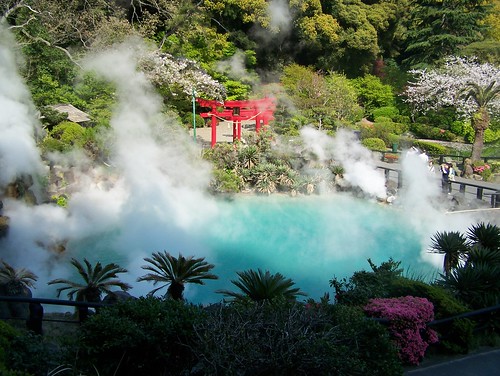
Beppu, located on the Japanese island of KyÅ«shÅ«, is the second largest producer of geothermal water in the world. Located in the same area are the “Nine Hells” or ponds that each has its own remarkable character and colour thanks to the variety of minerals in the outflows. These “Hells” are a popular tourist attraction in Japan but are little known outside of the country. Seven of the strange geothermal springs are located in the Kannawa area and are known as: Sea or Ocean Hell (Umi Jigoku), Shaven Head Hell (Oniishibozu Jigoku), Cooking Pot Hell (Kamado Jigoku), Mountain Hell (Yama Jigoku), Devil or Monster Mountain Hell (Oniyama Jigoku,) Golden Dragon Hell (Kinryu Jigoku) and White Pond Hell (Shiraike Jigoku). Sadly, as with many incredible natural wonders, the area surrounding it has become over commercialised and “tacky”.
Beppu was founded on April 1, 1924. It is famous for its thousands of onsen (hot springs), which are regarded as sacred. Beppu is Japan's onsen capital as it has the largest volume of hot water in the world aside from Yellowstone and the largest number of hot spring sources in Japan.

Kannawa District:


  • Umi Jigoku
The "sea hell" features a pond of hot, blue water. It is one of the more beautiful hells.


  • Oniishibozu Jigoku
This hell is named after the mud bubbles, which emerge from boiling mud pools and look like the shaven heads of monks.


  • Shiraike Jigoku
According to its name, the "white pond hell" features a pond of hot, milky white water.


  • Yama Jigoku
The "mountain hell" features small ponds of steaming hot water and a small zoo with small cages.


  • Kamado Jigoku
The "cooking pot hell" features several boiling ponds and a flashy demon statue as cook.


  • Oniyama Jigoku
Crocodiles are bred and kept on the grounds of the "monster mountain hell".


  • Kinryu Jigoku
The "golden dragon hell" features a dragon statue and a greenhouse, heated by the hot spring.


Shibaseki District:


  • Chinoike Jigoku
The "blood pond hell" features a pond of hot, red water. It is the most photogenic of the nine hells.

  • Tatsumaki Jigoku
The "spout hell" features a boiling hot geyser, which erupts every 25-30 minutes for about five minutes.


source 1 2 3

If you like this post just click here Posted By crkota with No comments
  • Popular
  • Categories
  • Archives